
Introduction: Mall as a Symbol of Modernity and Exclusion
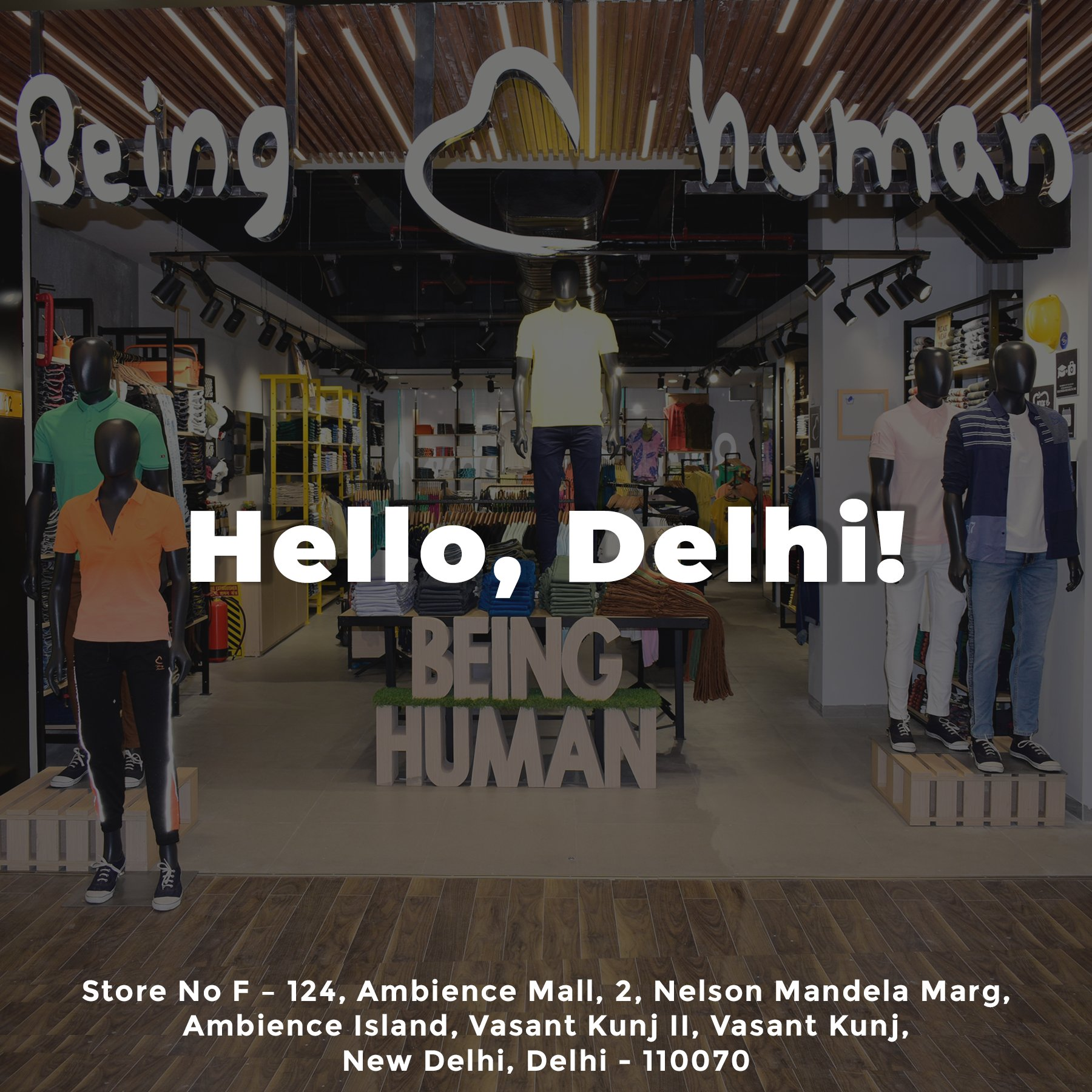
Ambience Mall, situated in Vasant Kunj, urban South Delhi, is a visual symbol of modernity. Its looming European architecture, white and yellowish lighting inside, and easy connectivity make the space an icon of elite consumption, which starkly contrasts with the public lives and critical imaginations of the adjacent Jawaharlal Nehru University. Even when I approached the mall, I was struck with a moment of dissonance when I saw a man performing namaz at the divider of the national highway, where the mall is situated in the background behind him. This juxtaposition reflects the tension between tradition and modernity, between the sacred and the secular. It highlights how different traditions of paradigm co-exist and sometimes intersect in modern urban spaces like this.
This tension is even sustained on the actual doorstep of the mall, where entry is discreetly but rigidly controlled. Security guards scan visitors, supposedly for security reasons, but functioning as de facto gatekeepers of cultural and class capital. As I noticed, those dressed in good attire and speaking standard English enter unproblematically; others, like loosely attired young persons, are questioned or held back. The body, language, and comportment have become the unofficial passport to entry. The concept of Pierre Bourdieu is better reflected in such spaces that function on the logic of “cultural capital (Bourdieu, 2016), which tend to favour those who display the proper class/aesthetic codes. In this regard, the mall is not a public space in any democratic sense, but rather a curated space for particular classes of people.
This controlled access is further reinforced by spatial organisation and monitoring by CCTV cameras, uniformed security personnel, and unspoken rules regarding where one can sit or stand to control not just who the visitor is, but also how they must be. I observed the seemingly innocuous action of a security guard who quickly policed a mother whose child was sitting cross-legged on the floor. These micro-controls show how consumption spaces like this discipline bodies, and reinforce the norms of “proper” behaviour and exclusivity, even in the absence of overt prohibitions.
The Presentation of Labour: Discipline and Emotional Management
Under the glittering facade of the mall, a complex world of labour unfolds, particularly emotional and aesthetic labour, predominantly carried out by youthful employees in a customer service culture like this. As I navigated through the mall, I engaged with the employees who work there as technical staff; they revealed that they must present themselves in a certain way: always smiling, standing with perfect posture, speaking politely, and maintaining a presentable appearance. These actions are not just courteous gestures but are a job requirement, enforced through formal training and internalised norms.
While interacting with Priyanka, a customer care executive, describes these expectations simply: “Hamme achcha dikhna hota hai, customers se polite ho kar respect ke sath baat karna hota hai.” This statement shows to what extent aesthetics and demeanour are institutionalised in the hiring and assessment process. Mall employees are not just controlled by what they do but also by the way they appear and present themselves. The company’s supply of uniforms, makeup standards, and grooming kits is a testament to this corporate control of the body. In fashion stores, workers are dressed according to brand fashion trends; in cosmetic shops such as Nykaa, they provide dramatic makeup and black dresses to conform to market-defined notions of beauty.
The concept of emotional labour by Arlie Hochschild (Hochschild, 2002) is very much reflected in such a space. Employees must control their feelings and facial expressions to match the emotional atmosphere of their workplace. For example, they are supposed to be cheery, calm, and cheerful, regardless of how they might feel. Such labour is unseen but draining, especially when it has to be sustained over long hours or when dealing with abusive customers. Michel Foucault’s docile body (Foucault, 1984) concept also provides insight into this context: the behaviour of the workers is shaped through observation and training on an ongoing basis, internalising norms so deeply that discipline seems voluntary. The mall, therefore, becomes a space where power does not act through explicit coercion but through subtle, ongoing modulation of the body and affects (Foucault, 1982).
Consuming Intimacy: Class, Gender, and Everyday Navigation
Despite its appearance as a consumer space, Ambience Mall is also a place of social engagement, affective expression, and recreation. This usage is stratified along gender and class lines. Affluent consumers easily walk through the mall, glancing and shopping without hesitation, while others venture into the mall with hesitation and a sense of fear. The mall also serves as a space of intimate possibility for young working-class couples who face difficulty with private space, but find a bit of acceptance for public affection in such a space.
However, public displays of affection were often discouraged in other city spaces, but they managed to find themselves quietly accepted there. These couples from such a class stroll hand in hand, snack together, and exchange quiet displays of concern. In a city with limited private space, these malls become inadvertent sanctuaries for them. This redefinition of the mall as a zone of consumption and a sanctuary for emotional life complicates the prevailing concept of capitalist alienation. These interactions suggest that individuals appropriate these commodified spaces to meet social and emotional needs that have little to do with shopping.
Furthermore, spaces like this are uniquely navigated by different genders. While women tend to be visible consumers, shopping freely through beauty shops and fashion stores, men increasingly are seen waiting, browsing on phones, hanging around entrances, or lingering around escalators. This pattern reinforces old gender roles and expectations, where shopping is constructed as feminine leisure and men as passive attendants. Far from being neutral, the mall reinforces deeply rooted cultural perceptions about gendered public behaviour (Ickes, 1993).
And lastly, the architecture of the space and how it is designed in terms of the escalators, elevators, and walkways shape the movement of the people differently and generate interesting kinds of social pauses. As I was noticing the behaviour of the people, I found something strange about the mall escalators. The moment people step onto them, their expressions shift, their eyes forward, and their bodies stiffen, as if temporarily suspended from social interaction. Couples, chatting seconds ago, go quiet, and strangers standing side by side suddenly avoid eye contact.
There’s an odd stillness in that brief moment of transport. In elevators, this feeling intensifies; people instinctively turn toward the door, as if unwilling to acknowledge the existence of others in such close quarters. It’s as if movement between floors forces people into a strange pause of personality, a brief, silent moment of social disconnection before stepping back into the fluid, curated world of the mall. These bodily micro-behaviours in this context suggest how even machine-generated movement in these spaces puts everyday sociality on hold, affirming the space of malls as a monitored or controlled conversation instead of accidental, free-flow interaction.
Conclusion
Ambience Mall thus emerges from this ethnographic writing as not just a shopping centre but a modern mechanism of control and regulation. It is a space where class divisions are performed and reinforced through surveillance, aesthetic policing, and behaviour expectations. However, within this curated space, individuals to some extent exercise agency through intimate acts, casual hanging around, and covert appropriations of space.
Moreover, on closer examination, what appears to be the malls as a shiny monument of capitalism is, in fact, a space of social negotiation in layers. The aesthetic and twinkling surfaces conceal the labour, discipline, and subtle tensions that underpin it. By bringing these everyday processes and behaviours to the public ground, the article demonstrates a compelling counter-narrative that dissects the intricate relationships between space, power, and lived experience in the context of such malls.
References
Bourdieu, P. (2016). Distinction. In W. Longhofer & D. Winchester (Eds.), Social theory re-wired (pp. 198–215). Routledge.
Foucault, M. (1982). The subject and power. Critical inquiry, 8(4), 777–795. https://doi.org/10.1086/448181
Foucault, M. (1984). The Foucault reader (P. Rabinow, Ed.). Vintage.
Hochschild, A. R. (2002). Emotional labour. In S. Jackson & S. Scott (Eds.), Gender: A sociological reader (pp. 192–196). Routledge.
Ickes, W. (1993). Traditional gender roles: Do they make, and then break, our relationships? Journal of Social Issues, 49(3), 71–85.
***
Saddam Hussain is a Doctoral Candidate in the Department of Sociology at South Asian University (SAU), New Delhi