
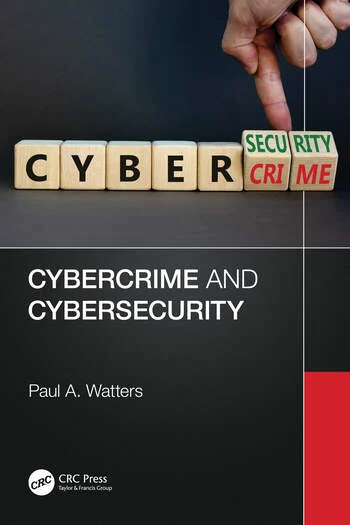
In this age of smartphones and constant connectivity, the digital world is both a blessing and a battlefield. Cybercrime and Cybersecurity (Routledge, 2024), written by Paul A. Watters, is a thoughtful guide that walks readers through the hidden dangers lurking behind our screens and the powerful shields we can build to protect ourselves. The book is neatly divided into twelve engaging chapters, each uncovering a new layer of the cyber universe. It starts with understanding the risks- how simple clicks can lead to big troubles. It then moves on to Operational Security, where everyday users and large organisations learn how to guard their digital doors. The author doesn’t just talk about problems; he also provides real-world solutions, showing how firewalls, encryption, and smart practices can make a difference. What makes this book special is its simplicity. Complex ideas are explained with clarity, and real examples make the dangers feel real. By the end of the journey, readers are not just informed but empowered to face the digital world with confidence.
The opening chapter author introduces readers to the growing threats of cyberattacks in our highly connected world. Using the SolarWinds hack of 2020 as a powerful example, it highlights how vulnerabilities in software can lead to massive data breaches, affecting government agencies and global corporations. The incident exposed the dangerous potential of state-sponsored cyberattacks and the need for stronger protective measures. The author also explains the difference between HTTP and HTTPS, emphasising the role of encryption in safeguarding online communications. While HTTP traffic can be intercepted and read by any third party, HTTPS adds a layer of encryption through public-key cryptography, making it significantly more secure. He further outlines the three pillars of cybersecurity: Confidentiality, which protects sensitive data; Integrity, which ensures data remains accurate and unaltered; and Availability, which guarantees access to information when needed. Through real-world cases and clear concepts, this chapter sets the stage for understanding how cyber threats operate- and why robust cybersecurity is essential in our digital age. Wattersexplains that while a completely secure environment is nearly impossible, understanding and managing risks can significantly reduce vulnerabilities. He defines risk as the likelihood of an adverse event and its potential impact, emphasising the need for careful assessment and strategic mitigation. Through clear examples, the chapter outlines how to scope risks effectively, prioritise high-risk areas, and accept residual risks responsibly. It serves as a practical guide to building resilient cybersecurity frameworks in an unpredictable digital world.
Cyber threats represent significant risks to digital infrastructures, targeting sensitive information, disrupting operations, and causing financial losses. Common types include Phishing Attacks, which use deceptive messages to trick users into revealing confidential data, and Ransomware, which locks important files and demands payment for their release. Another major threat is Malware- malicious software designed to infiltrate and damage computer systems, including viruses, worms, and Trojan horses. Insider Threats also pose risks, where employees or contractors unintentionally or deliberately compromise security. Additionally, Advanced Persistent Threats (APTs) involve long-term, targeted attacks aimed at extracting sensitive information stealthily. Vulnerabilities such as Hacking, Scams, and Coding Mistakes further expose systems to exploitation. To combat these threats, organisations must implement a strong Cybersecurity Strategy (CSS). This strategy includes clear Policies to define security measures, Roles and Responsibilities to ensure accountability, Management structures for oversight, and planning for threat prevention and response. Effective governance is essential, with designated security officers managing risk and enforcing protocols. Operational security is equally crucial, focusing on User Awareness, System Resilience, Physical Security, and Threat Response. Training and educating users help reduce human error, while structured planning strengthens organisational defences. This integrated approach ensures that security is maintained across all levels of operation.
Ensuring security within system or network operations is crucial for maintaining the integrity, availability, and confidentiality of digital infrastructures. Effective security strategies are often either integrated into business operations from the outset or added as an afterthought. The former is significantly more effective, providing stronger resilience against cyber threats. A well-structured Cybersecurity Strategy (CSS) serves as the foundation for protecting sensitive information, supported by clear policies, role definitions, and robust management practices. Key threats to digital systems include Phishing Attacks, which deceive users into sharing confidential information, and Ransomware, which locks critical files and demands payment. Malware, such as viruses and Trojan horses, can infiltrate systems to cause severe damage. Insider Threats arise when employees intentionally or unintentionally compromise security, while Advanced Persistent Threats (APTs) involve long-term, targeted hacking attempts to extract sensitive data. Operational responses to threats follow a defence-in-depth approach, emphasising prevention, detection, and effective incident management. Strategies include Situational Crime Prevention, which minimises opportunities for cyber incidents, and Operational Assurance, which continuously monitors activities to detect anomalies. To further strengthen security, Identification and Authentication processes verify user identities, while Role-Based Access Control (RBAC) manages access to critical resources based on specific job functions. Antivirus Software plays a critical role in identifying and neutralising malware threats through static scanning of files against known signatures and dynamic analysis of real-time memory activity. Together, these strategies ensure comprehensive protection, enhancing resilience against evolving cyber threats.
Computer forensics is the process of finding and collecting digital evidence to understand what happened during a cyberattack. This evidence is handled carefully so it can be used in court, just like DNA or fingerprints. It can include files, emails, or any digital information that helps prove if a crime happened. Network security is about protecting computer networks from hackers and cyber threats. It uses different layers of protection, such as routers, firewalls, and intrusion detection systems. These layers work together to block unauthorised access and keep important information safe. A strong security plan helps prevent attacks and quickly respond if they happen. Both computer forensics and network security are important for keeping digital information secure. Cybersecurity is not just a technical issue- it also needs strong legal support and government action. While organisations work to protect their networks, governments can help by setting clear cybersecurity policies and updating legal frameworks. An example is the U.S. government’s use of Stuxnet malware to prevent nuclear threats, showing how state intervention can protect national security. In legal cases, cybercrime trials are often complicated because juries may not understand technical details. Skilled lawyers can create confusion, especially with claims of open Wi-Fi misuse. Expert juries with technical knowledge could make fairer decisions in such cases. Honeypots are special systems used to study hackers and understand their methods. They help identify security gaps and test warning messages to prevent crimes. Though effective, they are not always practical for large-scale use.
The book offers a clear look at cybersecurity, covering both technical methods and the role of laws and government actions. It explains ideas like network defence, detecting intrusions, and using traps (honeypots) to catch cybercriminals. However, the technical language can be hard to follow for readers without a tech background. The section on legal challenges in cybercrime cases is thoughtful, but it doesn’t give enough practical solutions for dealing with jury confusion. The part about honeypots is interesting, but could use more real-life examples. Overall, it’s informative but could be easier to understand for a wider audience.
***
Zabihullah is a research scholar at the Department of Sociology, University of Allahabad, Prayagraj.