
The Limits of Disciplines
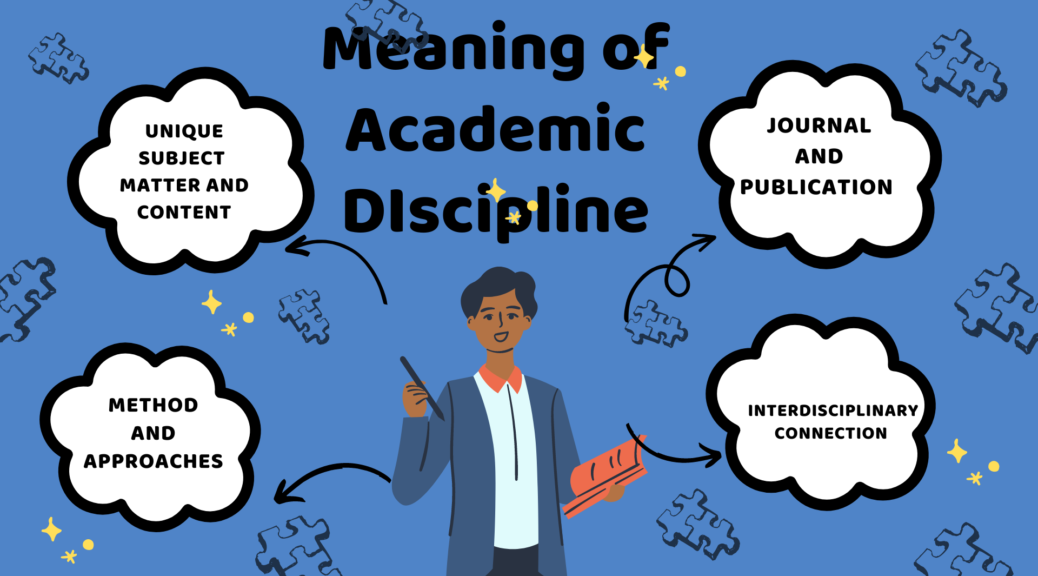
The disciplines, such as economics, history, sociology, political science, and anthropology, that are standard today, were not the basis of a sharp knowledge divide in the 1800s (Wallerstein, 2010). The 19th century and the early 20th century were the age of the great disciplinary divide. It is during this time that the organisational structures of the sciences, which we follow today, became fixed (Wallerstein, 2010). This great divide of nomothetic and idiographic knowledge is reaching its limits in the 21st century. There is a growing realisation that the existing disciplines are not equipped to account for the widespread ecological crisis in today’s world, let alone propose workable solutions (Agarwal, 2005). A consensus exists on the need for new models of thought promoting constructive engagement among the social, humanistic, and natural perspectives (Agarwal, 2005; Barry & Born, 2013). For instance, how can we explain global environmental change in an increasingly hyperconnected globalised world based on disciplines bound by their frameworks? Political ecologists argue that global environmental change cannot be explained by narrow technocratic ecological models, which do not account for structural forces such as capitalistic economic processes, power relations, knowledge production, and international development agencies, among others (Watts, 2004; Goldman, 2004; Barnes, 2014). Political ecologists assert that politics is inevitably ecological and ecology is inherently political (Robbins, 2011). They demonstrate the limitations of apolitical approaches such as eco-scarcity and modernisation accounts, which tend to dominate the global conversation on environmental change.
Tragedy of Commons or Tragedy of Disciplinarity?
The limits of narrow, mechanistic apolitical ecologies are nowhere more evident than in the debate on the tragedy of the commons. Garrett Hardin, in a paper published in 1968, argued that resources held in commons, such as rivers, air, and oceans, are subject to severe degradation (Feeny, Berkes, McCay, & Acheson, 1990). Hardin addresses the problem of overpopulation based on a thought experiment of a metaphorical village commons to conclude that freedom in the commons brings ruin to all (Feeny et al., 1990). In order to avoid the tragedy, he proposed that the commons should be brought under private control or be regulated by the state (Feeny et al., 1990). His conclusions became the common sense of the time in explaining resource degradation and environmental change. However, Hardin’s thesis is problematic on many counts. Hardin overlooks the role of structural forces such as capital, technology[i], and global institutions[ii] in explaining the degradation of the commons. He presents an ahistorical account, overlooking the role of colonial rule equipped with modern industrial technology, legal apparatus, and expert knowledge, which created far-reaching pressure on ecological commons in the global south[iii]. He has deep faith in the abilities of state and private actors in resource governance, which has been found problematic by scholars[iv]. Most importantly, he assumed communities were inert entities without any knowledge of resource governance, an argument that has been challenged by thick descriptions of the environmental ethics of indigenous communities.
Scholars of indigenous communities argue that such communities possess an alternative view of the natural environment, which is distinct from the dominant Western view of a secularised, utilitarian, and depersonalised nature (Berkes, 2012). Based on his long-term engagement with the Cree people of James Bay, Fikret Berkes argues that they revere nature. They believe in a cosmology in which humans are a part of a community of beings in the wider ecological system. The sacredness attached to ecology is evident in their hunting practices, their belief system, and their religious ideology. Presenting an emic view of Cree, Berkes notes that in their worldview, it is the animal and not the people who control the success of the hunt. The popular view of Western science, which is also applied in fish and wildlife management, suggests humans can control animal populations. On the contrary, the Cree believe that human management of animals and the environment is not possible. Berkes highlights that the hunters have an obligation to show respect for animals. Their code of conduct includes customary rules such as the hunter must maintain an attitude of humility while hunting, the animal must be approached with respect, offering to be made to the animal, and the meat consumption is also regulated by rules of respect. Similar community-based regulations are observed by other scholars, highlighting the ecological prudence of indigenous communities (Guha & Gadgil, 2013).
Limits of Interdisciplinarity?
Issues of our times, like global environmental change, cannot be explained by disciplinary silos. Hence, interdisciplinary work is held to be desirable, but scholars note that it is difficult to practice. Commons have been studied by both economists and anthropologists, while the concerns of both disciplines are different. The methods, intellectual histories, and what is even considered as knowledge are radically different in both disciplines. Economists consider individuals to be self-regarding entities whose tastes and preferences are exogenously given and are stable (Bardhan & Ray, 2006). Social and Cultural anthropologists, on the other hand, find these characteristics problematic. They argue that preferences are formed by the power and culture of the society as much as by inherent features of that object (Bardhan & Ray, 2006). Economics is more about the outcomes, while anthropology is centred around the processes (Bardhan & Ray, 2006). Political ecology has also been criticised for an unexamined, a priori focus on issues of politics and power (Roberts, 2020). The emphasis on politics prevents political ecologists from critically engaging with a detailed ecological analysis of an environmental phenomenon and processes of ecological change (Roberts, 2020). Unlike the earlier tradition of environmental anthropology, critics argue, political ecology suffers from a dearth of ecology (Roberts, 2020).
References:
Agarwal, A. (2005). Environmentality: Technologies of government and the making of subjects. Duke University Press.
Bardhan, P., & Ray, I. (2006). Methodological approaches to the question of the commons. Economic Development and Cultural Change, 54(3), 655–676.
Barnes, J. (2014). Cultivating the Nile: The everyday politics of water in Egypt. Duke University Press.
Barry, A., & Born, G. (Eds.). (2013). Interdisciplinarity: Reconfiguration of the social and natural sciences. Routledge.
Berkes, F. (2012). Sacred ecology (3rd ed.). Routledge.
D’Souza, R., & Nagendra, H. (2011). Changes in public commons as a consequence of urbanization: The Agara Lake in Bangalore, India. Environmental Management, 47(5), 840–850.
Feeny, D., Berkes, F., McCay, B. J., & Acheson, J. M. (1990). The tragedy of the commons: Twenty-two years later. Human Ecology, 18(1), 1–19.
Goldman, M. (2004). Imperial science, imperial nature: Environmental knowledge for the World Bank. In S. Jasanoff & M. L. Martello (Eds.), Earthly politics: Local and global in environmental governance (pp. 55–80). MIT Press.
Grove, R. (1995). Green imperialism: Colonial expansion, tropical island Edens and the origins of environmentalism, 1600–1860. Cambridge University Press.
Guha, R. (1983). Forestry in British and post-British India: A historical analysis. Economic and Political Weekly, 18(44), 1882–1896.
Gadgil, M., & Guha, R. (2013). This fissured land: An ecological history of India. Oxford University Press.
Merchant, C. (1983). Hydraulic technologies and the agricultural transformation of the English Fens. Environmental Review, 7(2), 85–108.
Rich, B. (2013). Mortgaging the earth: The World Bank, environmental impoverishment, and the crisis of development. Island Press.
Robbins, P. (2012). Political ecology: A critical introduction (2nd ed.). Wiley-Blackwell.
Roberts, J. (2020). Political ecology. In The Cambridge encyclopedia of anthropology. Cambridge University Press.
Watts, M. (2004). Resource curse? Governmentality, oil and power in the Niger Delta, Nigeria. Geopolitics, 9(1), 50–80.
Wallerstein, I. (2010). A world-system perspective on the social sciences. The British Journal of Sociology, 61(1), 167–176.
[i] In a paper, Hydraulic Technologies and the Agricultural Transformation of the English Fens (1983), Carolyn Merchant argues that the fenland ecology of Lincolnshire and Cambridgeshire has been irrevocably altered by hydraulic technology.
[ii] In the monograph Mortgaging the Earth: The World Bank, Environment Impoverishment and the Crisis of Development (2013), Bruce Rich highlights the far-reaching human and ecological damage caused by the World Bank’s lending and its projects.
[iii] Richard Grove in Green Imperialism: Colonial Expansion, Tropical Island Edens and the Origins of Environmentalism 1600-1860 (1995) describes ecological stress on tropical islands, such as massive deforestation caused by colonial rulers.
Ramachandra Guha called the colonial rule a watershed moment in the ecological history of India. He examined the role of laws, scientific forestry, and expert knowledge in the alienation of forest dwellers and degradation of large forest tracts in the Indian subcontinent.
[iv] Rohan D’Souza and Harini Nagendra (2011) argue that the change in governance of Agara Lake in Bangalore from community management to state management has led to its degradation. They also highlight the failures of private capital in managing lakes in the city.
***
Umang Verma is a PhD research scholar at the School of Ecology, Dr. B. R. Ambedkar University Delhi.