
The question sounded simple.
“Why did you leave?”
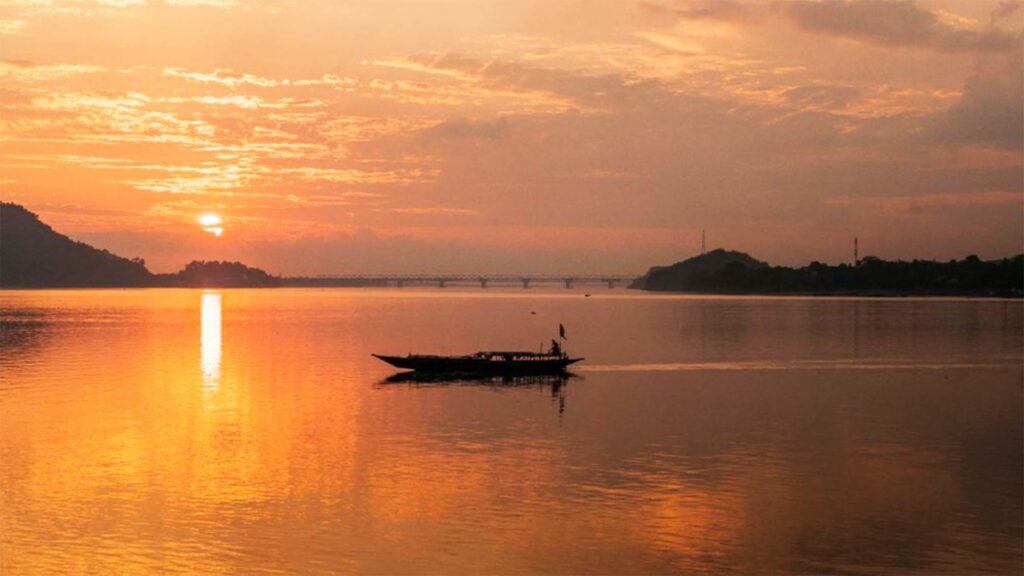
I had asked it many times before. During earlier fieldwork in Delhi, conversations about migration usually unfolded on their own. People spoke of work, families left behind, uncertain futures, and the quiet calculations that shaped their decisions. Sitting on the banks of the Brahmaputra in Guwahati, I expected this conversation to follow a similar path.
The man looked at me, smiled politely, and replied, “For work.”
Then he stopped.
I waited, expecting the rest of the story to arrive. It never did.
I tried approaching the question differently. I asked about his village, his family, and the circumstances that had brought him here. Each answer remained brief before the conversation drifted somewhere else. By the end of the interview, I closed my notebook with a lingering feeling that I had somehow failed. I had gone looking for a story and returned with a single sentence.
Months later, while reading through my field notes again, I found myself returning to that conversation. What if the interview had not failed at all? What if the silence was not a gap in my data but part of the data itself? Until then, I had been trained to listen carefully to what people said. Fieldwork was slowly teaching me that paying equal attention to what people chose not to say could reveal something just as important.
Entering the Field Looking for Answers
Like many sociology students, I entered the field carrying more than a notebook. I carried assumptions about what research was supposed to look like. We were trained to prepare interview schedules, formulate research questions, identify variables, and collect responses systematically. Good fieldwork, I believed, meant obtaining detailed answers. A successful interview was one in which respondents spoke openly, elaborated on their experiences, and provided the information that our research design sought to capture.
This expectation shaped the way I approached conversations during fieldwork. Whether speaking with migrant workers in Delhi or residents living along the Brahmaputra in Guwahati, I often carried an implicit belief that social reality would reveal itself through speech. If I asked the right questions, respondents would provide the data. If they remained brief, hesitant, or evasive, I assumed that something had gone wrong; perhaps the question was poorly framed, perhaps rapport had not been established, or perhaps the interview had simply failed. Without realising it, I had begun treating my interview schedule like a script. Every conversation was expected to move in a familiar direction, and when it didn’t, I assumed something had gone wrong. But field realities rarely followed the neat logic of research instruments.
Some respondents answered questions with remarkable detail, while others offered only fragments. Questions that appeared straightforward on paper sometimes generated discomfort, hesitation, laughter, or abrupt changes of topic. At the time, these moments felt frustrating because they disrupted the orderly flow of information I had expected to collect. Looking back, I began to realise that respondents were not merely transmitting information. They were actively negotiating what could be said, how it could be said, and to whom it could be said. If the aim of the researcher is to interpret meanings embedded within contexts and actions, then silences, pauses, evasions, and unfinished sentences cannot be dismissed as absences of data. Because they are part of the social text itself.
When the Answers Never Came
One assumption followed me into the field without my noticing it: I believed that difficult experiences would naturally produce detailed stories.If floods had disrupted livelihoods, people would want to talk about them. If migration had changed their lives, they would explain how. The field quietly challenged that belief.
In Guwahati, people spoke easily about the Brahmaputra. They described fishing practices, changing water levels, and the routines that revolved around the river. But certain questions seemed to alter the atmosphere almost instantly. Conversations slowed when I asked about compensation, government support, local politics, or decisions to leave home. Some respondents answered with a few words before moving on. Others smiled, laughed softly, or steered the discussion in another direction.
At first, I treated these moments as shortcomings in my fieldwork. I wondered whether I had framed the questions poorly or failed to build enough trust. But as similar encounters accumulated, they stopped feeling like isolated incidents. They became a pattern. When I read through my notebook later, I noticed that it was filled with fragments rather than complete narratives. There were observations, unfinished conversations, and moments where people seemed to stop just before saying something important. What stayed with me was not only what people had shared, but also the subjects they consistently moved away from.
Gradually, I began paying attention to the spaces between responses,likethe pauses alongside answers, moments of hesitation, and shifts in body language. People do not always withhold information because they have nothing to say. Sometimes what remains unsaid is precisely where the sociological imagination resides.
Learning to Read Silences
It took me some time to realise that unanswered questions could not always be resolved through more questions. In Guwahati, this led me beyond households and into government offices and administrative departments. I wanted to understand what lay behind the fragments in people’s accounts. Families facing eviction due to development projects remained uncertain about what would happen next, and questions regarding rehabilitation generated vague responses from both officials and affected communities. When I approached administrative offices, responsibility seemed to dissolve as one moved from one institution to another. Everyone appeared connected to the process, yet no one appeared fully accountable. The silence I had encountered in interviews was no longer confined to respondents; it existed within institutions as well.
At the same time, people spoke about floods with remarkable normality. I had expected anger or a language of crisis. Instead, I encountered acceptance. The annual flooding of the Brahmaputra had become woven into everyday life. Yet beneath this normalisation lay recurring disruptions to housing, employment, and access to drinking water. The effects were profound, yet rarely narrated as extraordinary events.
In the beginning, what appeared to be silence now gave the impression of adaptation. People had learned to live with conditions outsiders might describe as intolerable. The river sustained life while simultaneously threatening it. This was the moment I began to understand how suffering descends into the ordinary, becoming so thoroughly absorbed into daily routines that it ceases to appear as a crisis. The field was teaching me that meaning emerged not from a single interview but from the relationship between what people said, what institutions claimed, and what could be observed in lived reality.
The Answer in the Field
When I think back to that first conversation by the Brahmaputra, I no longer see it as a failed interview. The man had once been a fisherman. Over the years, repeated floods had made it increasingly difficult to continue the life he had always known, eventually pushing him towards the city in search of work. When I asked why he had left, his answer remained brief.
“For work.”
At the time, I thought the rest of the story had been left untold.
Now, I understand that I was looking for it in the wrong place.
The fuller answer was never meant to emerge from a single interview. I encountered it gradually, across many days in the field. I saw fragments of it in flood-prone settlements that were rebuilt after every monsoon, knowing the river would almost certainly rise again. I found another part of it in government offices, where responsibility became difficult to trace. And I recognised it in the quiet resilience of people who continued to depend on the same river that repeatedly unsettled their lives.
Looking back, I realise the fisherman had answered my question after all. His response was brief, but it was not incomplete. I had expected a story contained within one conversation, when the field was asking me to read across conversations, places, observations, and silences. That, perhaps, was the most valuable lesson I carried home. Fieldwork is not only about collecting answers. It is about learning where those answers live. Sometimes they are spoken openly. Sometimes they appear in routines that no longer seem remarkable to the people living them. And sometimes, they are scattered across the field itself, waiting for the researcher to notice how they connect. The field had not become quieter; I had simply learned to listen differently.
***
Subhechha Bharatiya holds a Master’s degree in Sociology from the Delhi School of Economics (DSE), University of Delhi. Her research interests lie at the intersection of migration, environmental sociology, development, and qualitative research methods. She is particularly interested in exploring how everyday experiences and field encounters reveal broader social processes.
This article beautifully illustrates that social realities are communicated not only through narratives but also through pauses, hesitations, and what remains unsaid. It reminds us that meaningful sociological understanding often emerges when researchers learn to observe beyond spoken words. Congratulations on this insightful contribution.
Excellent work…