
Research and epistemic violence
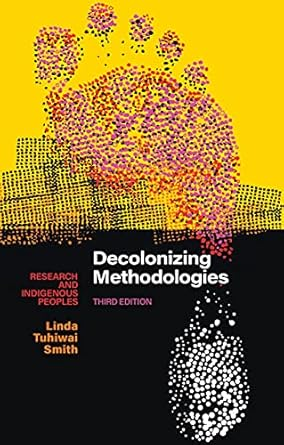
The word ‘research’ is probably one of the dirtiest words in the Indigenous world’s vocabulary, argues Linda Tuhiwai Smith in a critically acclaimed account, Decolonizing Methodologies: Research and Indigenous People (1999). Writing from the perspective of the colonized, she presents a scathing critique of Western knowledge systems, particularly the Eurocentric worldview of knowing. Building on the works of Edward Said, Michel Foucault, Frantz Fanon, and Ashis Nandy, she unravels the epistemic violence suffered by Indigenous communities due to the subversion of local ways of knowing, communicating, and understanding. The dominant Western ways of knowledge production have silenced, misrepresented, and even eradicated the indigenous population and their knowledge systems. Smith takes a radical stand on the enterprise of research, writing from her position as a Maori researcher, she contends that research by non-indigenous communities on Indigenous groups is an extension of imperialism. She considers research as a site of the tussle between the Western ways of knowing and their interests against the interests and ways of resistance of the ‘Others’. She challenges the common idea of research as an emancipatory exercise serving the greater good of humanity. On the contrary, she considers it exploitative and against the interests of the marginalized communities it claims to serve. Smith suggests Indigenous people globally have an alternative story to tell, which is the history of the Western tradition of research from the perspective of the colonized. These stories, she notes, are powerful forms of resistance shared and repeated across indigenous communities.
In evocative ways, Smith compels one to reflect on the enterprise of research and rethink researchers’ engagement with fieldwork, particularly in landscapes of marginality. In this piece, I reflect on the limitations of the enterprise of research through the lens of Smith’s account.
Research: A limited exercise
Research is a limited exercise. It is bound by funding constraints, project deadlines, accessibility of the field, availability of research participants, among other factors. This applies to research both in academic and non-academic spaces, like universities, consultancies, and think tanks. A standard social science PhD in India has a duration of 3-5 years, with most of the popular scholarships paying modest stipends even after qualifying for highly competitive exams. There are deadlines for every stage, such as coursework, synopsis, bi-annual progress reports, gathering data, and so on. A layer of complexity is added with the wider prevalence of corporate notions of time-space efficiency in research, writing, and its assessment (Shah, 2017). In the age of artificial intelligence, KPIs and cost-benefit assessments underpinned by the gratification of instant results make it an uphill task to justify long-term engagement with the area of research, essential for any project. This is more challenging in ethnographic research, requiring physical presence in the field for prolonged engagement with the field site. Elaborating on this problem, Alpa Shah, a noted anthropologist, mentions that in her personal experience, it is common for grants assessment bodies to question the cost of field visits if the respondents can be contacted online, to question the necessity of going in the field to engage with a person face-to-face (Shah, 2017). She argues it is even more difficult to make a case for open-ended study without pre-defined objectives or ask for time, forget the cost to learn often obscure languages that ethnographers work with. She mentions that it is a best practice for doctoral researchers to discard their proposals as fieldwork will raise pressing questions leading to the production of new forms of knowledge, which is inconceivable from the university corridors. Despite knowing this, we resort to quick fixes due to the compulsion of producing fast results under tight deadlines[1], simplifying complex social realities (Shah, 2017).
Intersubjectivity in research
Positivist tradition suggests research should be objective, detached from the values of the researcher. Bias on the part of the researcher, it claims, should be avoided at all costs. It presumes a reality existing out there waiting to be theorized by a value-neutral, detached observer. But is it so? A secluded, often marginalized community, having a radically different way of life in terms of language, culture, social structure, and modes of living, is out there to be theorized by an English-speaking urban dweller from the global north or from an economically prosperous region in general. Given the limits of the enterprise of research described above, can an observer produce a detached, objective account that does justice to the complex realities not limited by the confines of the disciplinary divide? Baviskar challenges this notion of enquiry (Baviskar, 1995). In her study of a tribal community in the Narmada valley, she asserts that knowledge is socially constituted, historically situated, and is informed by conflicting values (Baviskar, 1995). Every analytical enquiry is embedded in particular beliefs; it privileges one way of knowing the world over others, she argues. An enquiry, she argues, is a process which mediates between at least two mutually conditioned, subjective views, which are of the researcher and the research participants (subjects). It is a political act, a power move on the part of the researcher to enquire about a particular aspect of the community and overlook others. The world at large learns about the community through an account mediated by the researcher, who is a value-laden entity. In the texts, the ‘researched’ are translated by the ‘researcher’ (Baviskar, 1995, emphasis mine). It is the author who prevails, finally (Baviskar, 1995).
Linda Smith raises critical questions about standpoint epistemology. Knowledge, she argues, is laden with power relations and is contextual. This is evident in the glaring difference in perspective of ‘histories from below’ vis-à-vis top-down histories, in Dalit and upper caste literature, in feminist and a body of thought downplaying gender. Smith’s topical account raises critical questions about the enterprise of research, exhorting us to reconsider our methodologies and outlook towards research through the lens of decolonization.
References:
Smith, L.T. (1999). Decolonizing Methodologies: Research and Indigenous Peoples. University of Otago Press.
Shah, A. (2017). Ethnography? Participant Observation, A Potentially Revolutionary Praxis. HAU: Journal of Ethnographic Theory. 7(1): 45-59.
Baviskar, A. (1995). In the Belly of the River: Tribal Conflicts over Development in the Narmada Valley. Oxford University Press.
[1] See Michael Goldman. 2004. Imperial Science, Imperial Nature: Environmental Knowledge for the World (Bank) in Earthly Politics: Local and Global in Environmental Governance. Ed. Sheila Jasanoff and Marybeth Long Martello. The MIT Press.
***
Umang Verma is a Research Scholar at the School of Human Ecology, Dr. B.R. Ambedkar University, Delhi.