
British India’s partition in August 1947 led to the formation of two nation-states – India and Pakistan. On that day, India lost not only the territory and its people in the partition, but it also resulted in something that could never be regained, the cultural coherence which is expressed in the Ganga-Jamuna syncritic ethos- a phenomenon so often referred to in historical literature as tehzeeb, and produced new identities, relations and histories. The event of partition claimed many lives and was the cause of one of the greatest mass migrations of history. Violence was inextricably linked to it. Violence that took place outside the context of recognised, recognisable or community, and contributed to the production and reproduction of banal violence. Women of both the religions of Hinduism and Islam were particularly vulnerable to this collective violence; they had to go through the grotesque experiences of rape, communal hatred, social displacement, slaughter and fracture of families and livelihood, and what Joya Chatterji argues in her work that partition violence is the violence of ghoulish titillation rather than violence of actuality (Chandhoke, 2021).
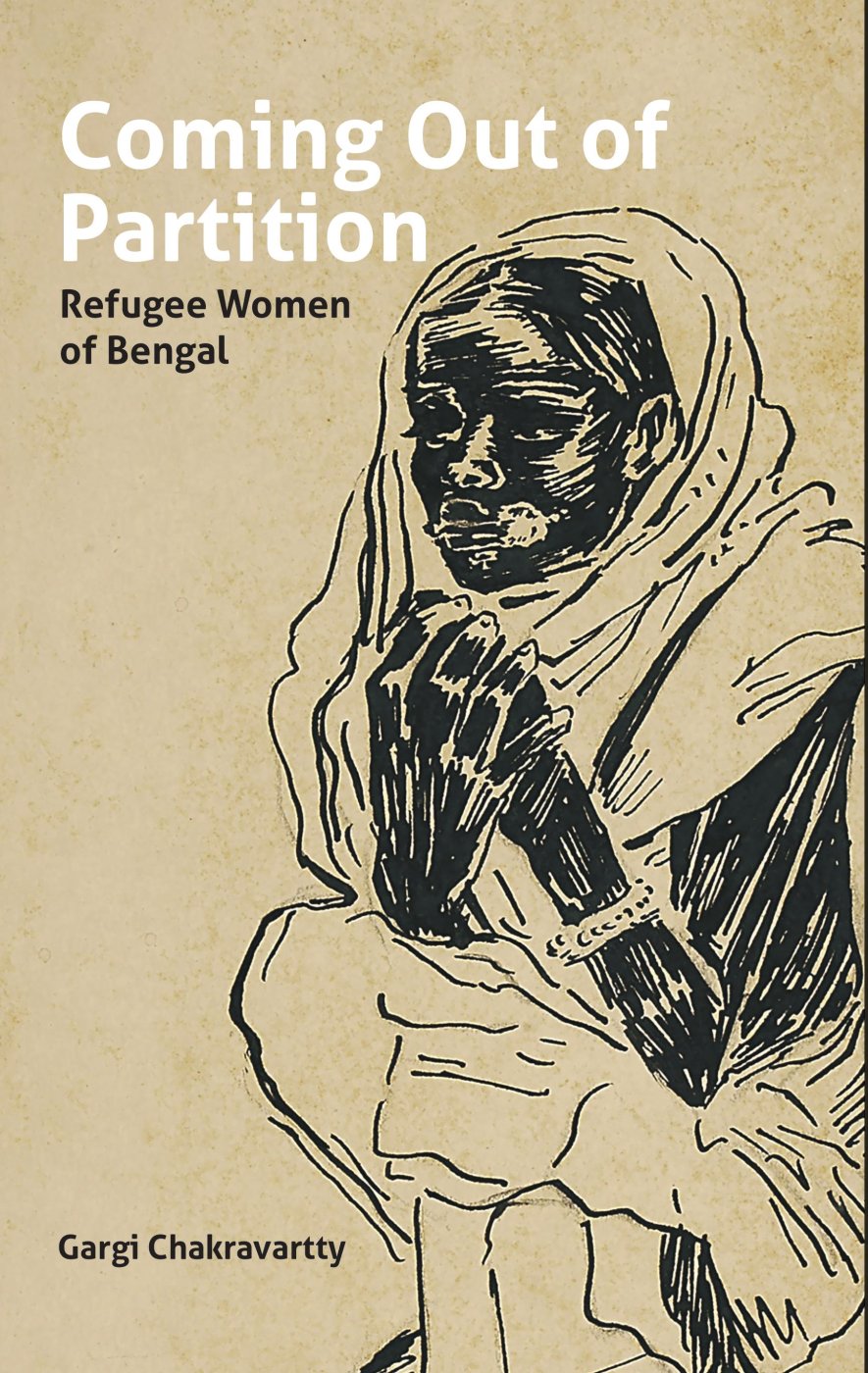
Gargi Chakravartty’s book Coming out of Partition: Refugee Women of Bengal (published by Tulika Books in 2025) brought out the gendered perspective of violence and studies the pattern of the migration and resettlement plans, which are encapsulated in the childhood memories, split of syncritic-culture, pains and the struggles of the displaced people who lost their home and countries in the communal violence. The analysis of the event of the Partition violence by Chakravartty uses the oral account she had generated through the saviour’s testimonies and archival records. Some documented evidence reveals another dimension of Partition, one that captures the emotional intensity of the period through vivid descriptions of the everyday terror people faced, while at the same time also offering a more sceptical interpretation of the events.
However, Chakravartty works on the stories of partition based on memories, which are of two types- one is the memory of the traumatic experience where women are subjected to the inconceivable brutalities, stripped naked, gang raped, mutilated and murdered. Feminist writers on gender violence have vividly described how the way breasts were amputated, women’s wombs opened, and foetuses were killed. The lives of the women who had undergone such horror were irrevocably altered by events over which they had no control. Yet some of them established a home with their rapist and abductors. This regular violence marginalised the women of both sides, who became victims of male chauvinism. And the other is the memory of human concerns, which can be seen in the way minority groups reorganised their cultural and social templates and hence integration and structuring of organisations became easy. They demonstrated high secular predisposing and provided care to both extremes of the minority groups. Remarkably, women belonging to such communities crossed the community barriers; they shared festivals like Eid and Durga Puja, even during the period of extreme panic and chaos.
In Chapters 2 and 3, Chakravartty has tried to map out the trajectory of political development that moved from violence to life-affirming political struggles that the victims undertook to gain an identity. Generally, the gender dimension of the partition evokes emotions of violence, rape of the women and the trauma of the communal situation, but the silent metaphors of women’s life remain unnoticed. The sense of sharing responsibility and, at times, taking the entire economic burden of the families, and a new phenomenon in the trajectories of refugee women’s search for identity, facilitates a breakthrough in the attitude of patriarchal society. The women of the left parties played an important role in the lives of refugee women, providing an opportunity to move in the public sphere, which was unimaginable to many women before the partition. After the partition, this intricate enmeshing of the political life of the women meant a drastic restructuring of the private-public dichotomy.
The partition violence is more difficult to understand because there is no easy aggressor or victim, since it puts people against the people and neighbour against the neighbour. Once it begins, there is no control of the violence because the forces of law and order, in the form of police and army, have by this time also become communalised and divided based on religion. In this vein, Joya Chatterjee’s work foregrounded the problematic attitude of the government towards the refugee: a scornful and patronising attitude rooted in the perception that living on the dole would result in permanent dependency (Chatterji, 2023).
Partition is a painful memory in the public discourses of India, Pakistan and Bangladesh and did not solve the communal problem in South Asia; rather, it is routinely invoked whenever there is a conflict around religion (Chandhoke, 2021). From the India-Pakistan cricket match to the Pahalgam terror attack, the event of partition continues to impact the lives of Indians today, whether in the form of communal violence, hate against the minorities, or public suspicion of the loyalty of Muslims to India. Nevertheless, we have to ask ourselves this question: have we really come out of the partition? How many times does communalism partition our hearts and minds?
Chakravartty’s work very well scans the inner fold of women’s work and experiences in terms of small but important shifts in language use and dialects, in the food habits and purity-pollution taboos, and in the caste practices and living patterns, which have rarely found a place in scholarly studies so far. The researcher discovers a significant growth of such social attitudes and a degradation of traditional conventions. This book remains profoundly relevant to contemporary social and political upheavals, which is visible in the ongoing conflicts between Israel and Palestine, and Russia and Ukraine, where unspeakable acts of violence have devastated innocent women and produced refugees. Survivors of such violence, particularly women, face dispossession, are rejected by their families, rendered homeless, and forced into a precarious existence in nations they once called home. These atrocities often defy articulation, lacking the language to fully capture their horror. By illuminating such enduring injustices, the book compels us to confront the human cost of partition and underscores the urgent need for scholarly and societal engagement with these issues.
References
Chandhoke, N. (2021). The Violence in Our Bones: Mapping the Deadly Fault Lines Within Indian Society. Aleph Book Company.
Chatterji, J. (2023). Shadows at Noon: The South Asian Twentieth Century. Penguin.
***
Dev Raj is an independent research scholar with interests in the anthropology of caste and religion.