
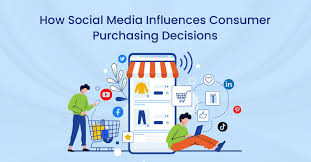
Social media has changed a lot about how we live, but perhaps most significantly, how we shop. We don’t just buy what we need anymore. We buy what we see. What we’re told is “in.” What our friends, influencers, and algorithms present as aspirational. Platforms like Instagram, YouTube, and TikTok have turned into giant mood boards of curated lifestyles and casual product placements. And without even realising it, many of us end up spending more than we planned.
I remember seeing a reel about a skincare serum that promised a “glass-skin glow.” The influencer’s skin was flawless. Comments were flooded with “adding to cart” and “TikTok made me buy it.” I didn’t think twice before clicking ‘Buy Now.’ Looking back, I didn’t even check the ingredients; I just wanted to feel a part of that glowing, flawless community.
This article explores how social media influences what we buy and why, and how sociology helps us unpack these subtle yet powerful forces.
The Rise of Influencer Consumption
Gone are the days of obvious advertisements. Today, ads are seamlessly woven into daily life. An influencer’s breakfast, morning routine, or outfit-of-the-day might be sponsored, but we rarely notice. These subtle cues are powerful because they don’t feel like advertising. They feel like trust. And that’s what makes them work.
Hashtags like #TikTokMadeMeBuyIt (with over 80 billion views) show how everyday users are turning their feeds into shopping aisles. It’s “ peer pressure” digitally upgraded.
Political communication scholar Pippa Norris reminds us that the media doesn’t just reflect society, it helps shape political agendas, public opinion, and even emotional responses. As she writes, “Mass media does not simply mirror society; instead, it helps frame the public agenda and shape the contours of political and social debates” (Norris, 2000, p. 5). While her work focuses on democratic participation, the same logic applies to consumer culture: media channels, including social media, don’t just respond to demand, they create it.
Why We Buy: A Sociological Peek
Sociology reminds us that consumption isn’t just about things. As Bourdieu (1984) writes, “Habitus is a system of dispositions, that is of permanent manners of being, seeing, acting and thinking” (p. 170). This helps us understand how our social upbringing quietly shapes our preferences and perceptions of what is desirable, trendy, or tasteful. It’s about meaning. The French sociologist Pierre Bourdieu believed that our “tastes” reflect our social upbringing (Bourdieu, 1984, p. 170). This is what he called habitus, the deeply ingrained ways we think, feel, and act, shaped by where we come from. What looks ‘cool’ or ‘worth it’ to one person might seem pointless to another, and social media makes these class-coded differences hyper-visible.
Take something as simple as a water bottle. Some users flaunt a 2000-rupee aesthetic flask with a filter and timer. Others stick to a reused plastic bottle. Both are valid, but they come loaded with signals about lifestyle, health, and class.
Bourdieu also talks about taste—not just in food or fashion, but as a way of belonging. Buying an iPhone or minimalist décor isn’t just practical; it’s often about signalling a certain kind of cultural capital. And on Instagram, this gets performed daily.
Algorithms, Influencers & The Illusion of Free Will
It feels like we’re making our own decisions, but are we? Algorithms track what we pause on, what we like, and what we search for, and then flood our feeds with similar products. Before we know it, we’re deep into skincare reels or laptop accessory hauls.
Influencers, too, don’t just shape trends; they become trends. Their choices ripple across millions of screens, and suddenly, a bag or shoe we’d never heard of is sold out. Sociologist Erving Goffman might say this is part of our “front stage” performance. We use purchases to craft the image we want to present online. As Goffman puts it, “When an individual appears before others, his performance will tend to incorporate and exemplify the officially accredited values of the society” (Goffman, 1959, p. 22).
Norris (2006) also explored how media agenda-setting subtly influences voter decisions in elections (p. 198). Similarly, the social media feed becomes a form of agenda-setting for consumption—it tells us what’s important, what’s trending, and what we should care about.
When Shopping Becomes Emotional Labour
Arlie Hochschild’s idea of emotional labour, originally used for jobs like flight attendants or nurses, applies eerily well to influencers today (Hochschild, 1983, p. 7). As she explains, “This kind of labour calls for a coordination of mind and feeling… beneath the difference between physical and emotional labour there lies a similarity in the possible cost of doing the work: the worker can become estranged or alienated from an aspect of self… that is used to do the work.” They’re expected to smile, stay positive, share unboxings, celebrate every brand collaboration, and maintain an aesthetic 24/7. That’s a job.
But even for ordinary users, there’s pressure. We feel happiness when we post a new gadget. We carefully edit photos to look effortlessly cool. We pretend spending is always joyful, never anxious. That too is a kind of emotional labour done for likes, for belonging, or just to keep up.
The Price We Pay
Social media-driven consumerism often comes with hidden costs. We’re shown endless trends and feel the urge to buy not out of need, but from a fear of missing out. This leads to overconsumption, where products pile up but satisfaction doesn’t. Mentally, it’s draining. Perfect posts and influencer lives can spark comparison, insecurity, and anxiety. And for those with fewer resources, the pressure to match online lifestyles can cause class stress and emotional fatigue. These quiet burdens shape how we see ourselves and define success, often without us noticing.
What Can We Do?
Sociology encourages us to pause and reflect on the forces shaping our consumption. It helps us ask who truly benefits when we click ‘Buy Now’. Is it us, or the companies and influencers shaping our desires? Are we shopping because we genuinely need something, or because an algorithm nudged us in that direction? And when we follow trends, are they aligned with our identities, or just ways to feel like we belong?
By asking these kinds of questions, we don’t just resist the pull of the feed; we begin to reclaim agency over our spending, our attention, and ultimately, our sense of self.
In Closing
The next time you reach for that viral product or feel FOMO from a haul video, stop and ask: Is it you who wants it or the feed? Behind the pretty filters and reels lies a carefully constructed world of trends, tastes, and influence. And the more we understand it, the more power we have to choose consciously.
References
Bourdieu, P. (1984). Distinction: A social critique of the judgement of taste. Harvard University Press.
Goffman, E. (1959). The presentation of self in everyday life. Anchor Books.
Hochschild, A. R. (1983). The managed heart: Commercialisation of human feeling. University of California Press.
Norris, P. (2000). A virtuous circle: Political communications in postindustrial societies. Cambridge University Press.
Norris, P. (2006). Did the media matter? Agenda-setting, persuasion and mobilisation effects in the British general election campaign. British Politics, 1(2), 195–221.
***
Shaloo Priyadarshini is a Master’s student in Sociology at Jawaharlal Nehru University (JNU), New Delhi. A research enthusiast, she has previously written for the Journal of Emerging Investigators. Her academic interests include digital sociology, social stratification, and the experiences of marginalised communities.