
The Kalighat temple complex – one of the 51 Shakti Pithas (sites of pilgrimage devoted to the Divine Feminine) present across South Asia – lies in the urban heart of Kolkata. As a site of pilgrimage, Kalighat is considered by many to be a ‘mahapitha’ (a great site of pilgrimage), gaining its status from its reputation as the resting place of the four right toes of Sati, as they fell on being cut by Vishnu during Shiva’s divine rampage. To this end, the Kalighat temple complex can be found, on a random day, to be full to bursting with people from across the country – including, mostly, Hindu pilgrims on their ‘tirtha yatras’ (journeys of pilgrimage), and then some. The Kalighat temple complex can also be found at the second spot, following the Victoria Memorial, on the heritage tourism section of the website of West Bengal tourism. As a layered space of intense physical and mental activity heavily reliant on pre-mediated rituals and norms, the Kalighat temple complex has stood in its place, from crude, ‘kaccha’ beginnings to a recent, more ‘pukka’ present, for upwards of 400 years. On the West Bengal government’s website, it is, therefore, rightfully called ‘ancient’. During my time at Kalighat, and after I noticed the small, round, blue label delineating Kalighat as a ‘heritage tourism’ site, I spent some time allied with confusion. Nothing about this place seemed to be ancient.
Off Rashbehari Mor, and accessible via the Kalighat stop of the north-south line of the Kolkata metro, on one’s way to the temple, one will find oneself greeted by a large gate housing two escalators. This is the entrance to the recently inaugurated (April 2025) Kalighat skywalk, which teleports visitors directly to the temple gates, runs parallel to, and above the older route taken by most – the Kali temple road. The skywalk – which is listed officially on Google Maps as a ‘tourist attraction’ – main purpose, as understood by many, to bypass the dinge and congestion on the road underneath it, and to better manage crowds. This metal mammoth cuts through old, crumbling buildings which line the sides of the Kali temple road, and those walking on it are entirely unaware of the existence of the bustling commercial environment that lies right under their feet. This environment consists of permanent, semi-permanent, and moving stalls selling religious paraphernalia, mostly including statuettes of divinities, books (panjikas, panchalis, and bratkathas), brass utensils, and Sankha-Pola (white shell and red bangles, worn predominantly by married Bengali women). As I was informed by shopkeepers on site, these shops tend to be in the range of 60-100 years old, and their business is often generational.
At the end of the Kali temple road, one is greeted with two things: again, a large gate housing two escalators, on both sides of the road (the end of the skywalk on the way to the Kalighat temple complex, and the starting point of the return to the main road), and the end of the lane of shops – broken up by bylanes extending deeper into the greater Kalighat area (also containing shops, though smaller in nature than those on the Kali temple road). The end of the Kalighat bazaar, however, is so minuscule that it is hardly observable. The pillars propping up the skywalk take up space in the road and block shopfronts. One must squeeze through a gap less than half a meter wide to get through to the temple complex.
Post this journey, one has now reached the front door of the Kalighat temple complex. Below are images of the same from c. 2017 (figure 1) and c. 2025 (figure 2).
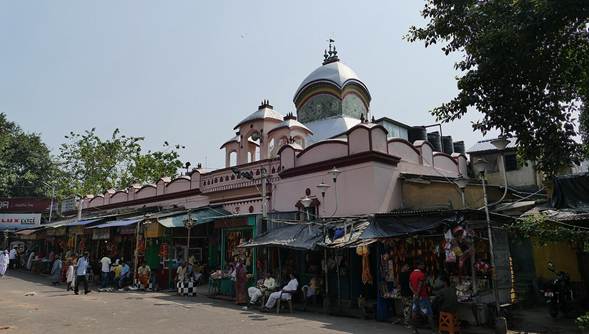
Figure.1: The Kalighat temple complex in 2017 (Cropped, from Wikimedia Commons [photograph], by Ankur. P, 2017. https://commons.wikimedia.org/wiki/File:Kalighat_Temple_Kolkata_(38293858642).jpg)
.jpg)
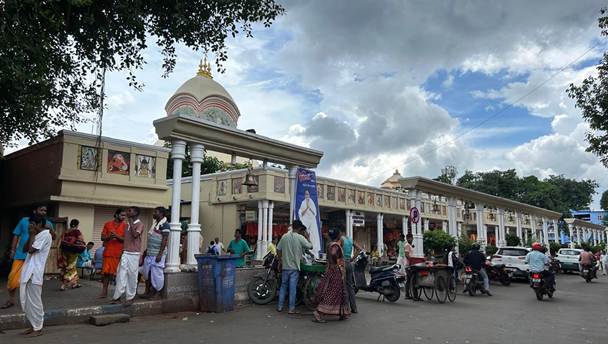
Figure.2: The Kalighat temple complex in c. 2025 (From author [photograph], by Shirsha Chanda, 2025)
Already, as can be seen above, there has been a massive architectural and aesthetic change in the boundary gate and shop configurations between the years 2017-2025. The earlier, pink and maroon boundary wall headed by curved roof – atchala – esque designs are now replaced by straight lines, interspersed with Kalighat Patachitra prints on tarpaulin. Only the installation on top of the main gate of entry remains. Shops on the body of this boundary wall, earlier supported by tin/tarpaulin roofs and semi-permanent boundaries of wood and/or plastic, are now a part of the boundary wall, which was built with space for small shops within it. The assignment of these shops, as I was informed on site, was through a lottery system conducted throughout the broader Kalighat temple area, and shops were not necessarily allocated to those present there before this reconstruction. The road in front of figure.1 is now a part of the reach of the temple complex, forming a sort of promenade, whose width is mediated by a row of pillars opposite to the boundary wall (figure. 3). Essentially, this has resulted in this part of the Kali temple road being halved for transport, with a half of it attached now to the Kalighat temple complex.
Figure. 3: The Kalighat Promenade (From author [photograph], by Shirsha Chanda, 2025)
With the addition of the skywalk and Kolkata heritage plaques to the temple gates, these structural changes to the main temple complex must be seen in conjunction with the Government’s larger push to establish Kalighat as a site of tourism. Subject to a major renovation project passed in September 2023 (TNN, 2023) by the Reliance foundation, the goal was to ‘renovate and restore the famous Kalighat temple in Kolkata’ (TNN, 2023), which entailed repairs in the ‘entire temple complex, including the centuries old heritage structures’ (TNN, 2023) while ‘restoring them to their original glory’ (TNN, 2023). Involving artists and conservators, the renovation aimed to ‘recreate and restore the beauty of the historic temple, taking it back to what it might have looked like in its heyday’ (Karia, 2024). The objective had been, rather than changing any fundamentals, to highlight its existing ethos (Karia, 2024). To this end, multiple terracotta plaques and motifs have been recreated, replicated, and added to the temple in the process. However, when figures 1 and 2 are compared, the goal of preservation seems to be challenged by its outcome. With this ‘modern-era renovation’ (Karia, 2024), it seems almost as if in a rush for better marketability, and in anticipation of larger crowds (the actual driving force behind many changes in the temple), heritage is missing from ‘heritage’ tourism.
Should a site endowed with extremely heavy and personal meanings rooted deeply in history, religion, and belief even be considered to be marketed as a site of tourism? If it can be, does removing its signs of ‘ugliness’ – grime, disorder, chaos – to create something pearly and shining, an illusion of sterility, change the nature of the site itself, so much so that in an attempt to re-achieve the ancient, through indicators of modernity, we have forgotten – rather, removed – the kind of ancient we set out to preserve? Perhaps these questions are best addressed anecdotally. Across the street from the temple complex, it seems as though this revamp has abruptly stopped. Here, there still exist shops covered in layers of grime as a second skin, shops propped up on bamboo shoots and supported by tarpaulin. Here, tantra reigns supreme – priests tell me that ‘development’ has no plans of reaching them. The ghat, which forms half the name of this place, might as well be from a different planet. The secretary of the Kalighat workers association asks, ‘If this were now a site revamped to attract more tourists, pilgrims, people, then why are souvenir shops so physically eclipsed?’. An 86-year-old shop-owner asks, ‘They have put a fountain in Kali’s sacred lake – you tell me, does Kali like all this?’. Perhaps that is the question.
References:
TNN. (2023, November 22). ‘Reliance to restore Kalighat temple to original glory.’ The Times of India. https://timesofindia.indiatimes.com/city/kolkata/reliance-foundation-restore-kalighat-temple-original-glory/articleshow/105400299.cms
Karia, V. (2024, February 20). Kolkata’s 200-year-old Kalighat temple gets its first modern-era renovation. The Telegraph online. https://www.telegraphindia.com/my-kolkata/places/take-a-look-inside-the-landmark-restoration-of-kolkatas-kalighat-temple-with-artist-tamal-bhattacharya/cid/2001830#goog_rewarded
***
Shirsha Chanda is a 4th-year undergraduate student of History, Sociology, and Anthropology at Ashoka University (Sonepat, Haryana). My interests lie in sacred geographies and historical and contemporary religion at the intersection of text and practice, explored through visual, literary, and architectural sources, and historical and anthropological methods.