
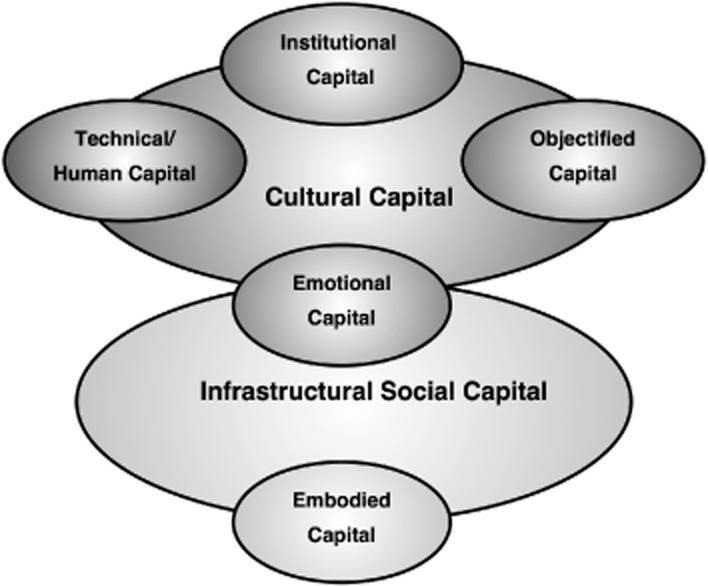
Pierre Bourdieu conceptualised cultural capital as a crucial factor in social stratification, shaping access to opportunities and social mobility. There are three types of cultural capital, viz., embodied (internalised knowledge and skills), objectified (material and cultural goods) and institutionalised (credentials and qualifications). Of the three, institutionalised cultural capital plays a significant role in shaping fieldwork dynamics. Fieldwork is shaped by the researcher’s academic credentials and affiliations. During fieldwork at Konark Sun Temple in Konark, Odisha, author 1 realised how his institutionalised cultural capital, particularly undergraduate degree in engineering and PhD institute affiliation, shaped access and interactions with respondents in the field. It enhanced his ability to connect with respondents and gather meaningful data. This was enabled by open communication that followed. This realisation became more pronounced as he began data entry, which involved recall of fieldwork interactions and the data collection process itself.
Some respondents were initially hesitant to participate in the research process. However, the questionnaire cover page mentioned author 1’s academic institute. On learning about his institute affiliation, through a questionnaire or due to curiosity, he noticed a change in the respondent’s attitude. They became more forthcoming. Perhaps, the institute affiliation gave legitimacy to the whole data collection process. Similarly, author 1’s educational background in engineering elicited a welcoming response. Some respondents displayed curiosity and engaged actively in research conservation, likely influenced by his credentials. It is essential to build trust with respondents as it helps them to be at ease and willing to share honest information. Institutionalised cultural capital comes in handy for quickly building and sustaining a sense of connection with respondents.
On the other hand, institutionalised cultural capital, while aiding privileged scholars like author 1, significantly disadvantages those from less well-known institutions. Further, the situation is aggravated by the fact that such research scholars may not have financial funding for their doctoral studies. Without the credentials and financial resources, these research scholars face greater challenges during their fieldwork. They encounter the dual burden of conducting fieldwork on their own expense and with inadequate institutionalised cultural capital. This may perhaps hurt their motivation to conduct fieldwork and the quality of data collected. This may also discourage them from undertaking intensive fieldwork due to a cold response from respondents owing to the absence of adequate institutionalised cultural capital. Furthermore, the respondent’s perception may itself reinforce inequalities, as research scholars’ future contributions may also be undervalued based on their doctoral affiliation. This perpetuates academic elitism, whereby it is believed that quality research takes place in the confines of a few reputed institutes.
While fieldwork is widely recognised as challenging, it is often undervalued within the overall research hierarchy. The task of data collection is increasingly outsourced from the Global North to the Global South, shifting the emphasis towards data analysis and interpretation over on-site fieldwork. This asymmetrical dynamic becomes evident even in the Global South when well-funded Indian institutions employ highly qualified yet underpaid research assistants for data collection and fieldwork. This lends a negative perception to the fieldwork itself. From the aforementioned lens, it can be said that institutionalised cultural capital does affect accessibility and ease of doing fieldwork, an overlooked yet significant aspect of fieldwork.
***
Amit Yadav is a research scholar and Debashis Pattanaik is a faculty member at the School of Humanities and Social Sciences, National Institute of Science Education and Research (NISER), Bhubaneswar, Homi Bhabha National Institute (HBNI), Training School Complex, Anushaktinagar, Mumbai.