
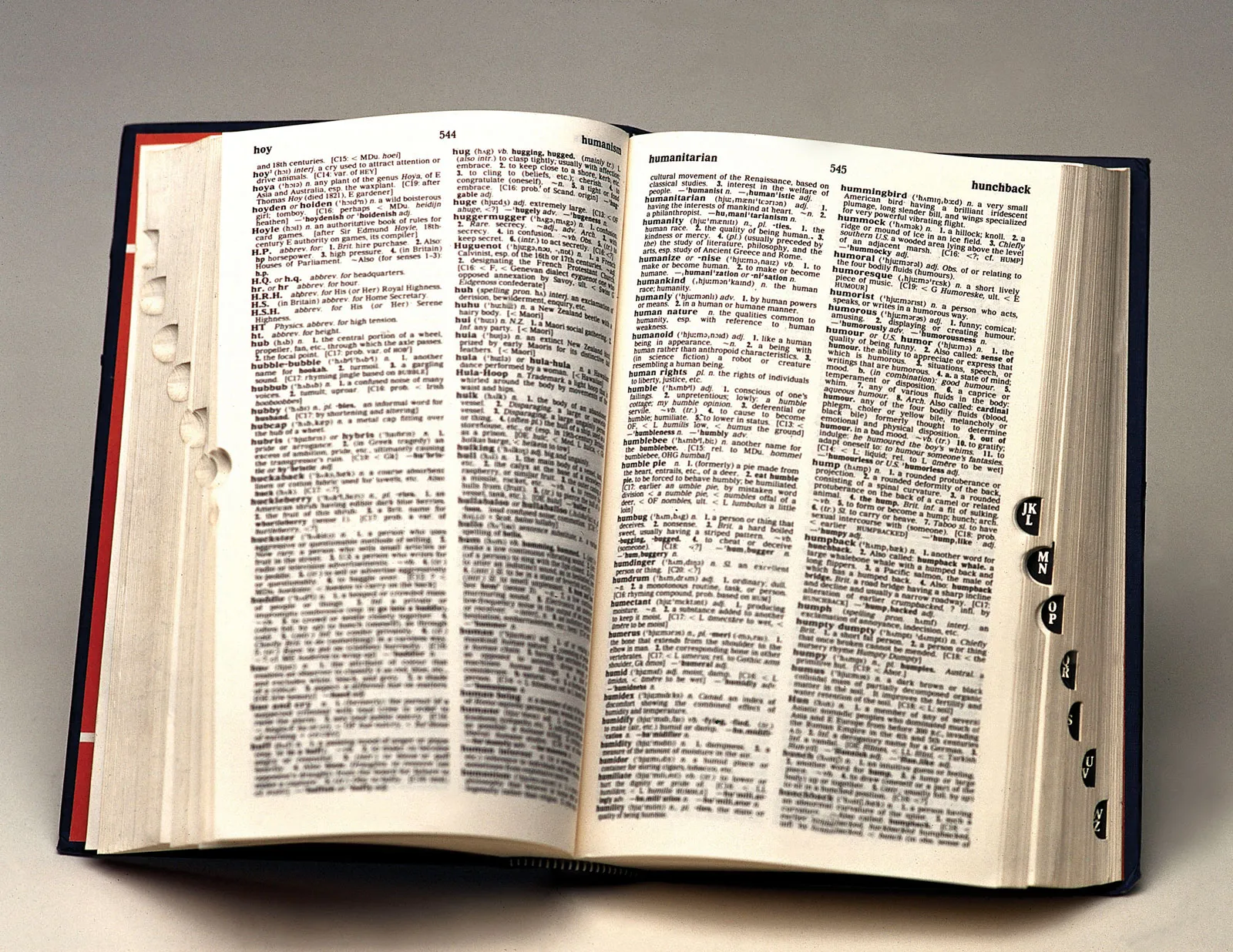
Recently, it was announced that the Cambridge Dictionary has added around 6,000 new words, including Parasocial, Broligrachy, Delulu, Skibidi, Slop, Memify, Tradwife, Work-Wife, Work-Spouse, Gen Z, and Gen Alpha, among others. There has been heightened enthusiasm in sociological circles that the word “Parasocial” has been selected as Word of the Year 2025 by Cambridge. The term was first used by sociologists, Donald Horton and Richard Wohl, in 1956 to describe how viewers developed one-sided relationships with television personalities.
The factors that influence inclusion of a word in a dictionary include the popularity of the word in digital culture, new technological terminology, opening in new knowledge domains, changes in social setups, transformation of work relationships and even the pandemic. Here, the question arises, “Who decides what counts as a ‘real’ word to form part of a dictionary? How are the words shortlisted and selected?”
Colin McIntosh, Lexical Programme Manager, Cambridge Dictionary, clarifies, “It’s not every day you get to see words like Skibidi and Delulu make their way into the Dictionary. We only add words where we think they’ll have staying power. Internet culture is changing the English language, and the effect is fascinating to observe and capture in the Dictionary.”The words are included based on criteria broadly encompassing frequency of their use; consistency of their meanings, significant enough spread and commonality of definitions across regions.
The criteria of selection, though, seem quite straightforward, but have complexity from a sociological angle: How to decode “staying power” and “significant enough spread” of a word while shortlisting them for dictionaries and ascertaining the neutrality in the selection process.
Qarshiboyeva, M. and Abduraxmanova (2024) have underlined the problems, complexities and challenges of English lexicography. As English is a popular language in both the West and the East, words are coined in abundance in both regions. However, there is a chance of bias in giving more space and accommodation to the words germinated in the West due to a colonial superiority syndrome. The bias of considering the Indian subcontinent as less important continuously haunts the professional ethics of lexicography.
Here, the model of Little Tradition and Great Tradition conceptualised by Robert Redfield comes to be handy and relevant. Redfield puts forward that the culture of folk themes, oral traditions, dialects, and local deities forms the Little Tradition. Whereas, on the other hand, the culture professed by priests and hierarchy of religious leaders covering a legitimate form of all reflective, systematic and textually elaborated rituals/ epics may be considered as the Great Tradition.
Further, while shortlisting words, the possibility of analogically considering the West as a Great Tradition cannot be ruled out. Indian words like Juggad took comparatively a very long time to make their space in dictionaries in comparison to even slurs and slang from Western English. The colonial supremacy syndrome definitely needs to be counterweighed.
The connotation of the same word may be different across different regions. There are chances to overlook the definitions of the word from the “little traditions” or less significant regions. For example, the recently added word “work-wife” means “a woman with whom someone has a close, but not romantic, relationship at work, in which the two people help and trust each other in the same way that a married couple does.” If someone thinks of using this word in Indian work culture, even in a corporate office situated in India, then it may be considered too offensive, as the word wife /spouse cannot be separated from a romantic relationship in the Indian context.
The digital space is the new catchment area for the selection of words. Though the digital space is rich enough from a lexicographical angle but there also exists algorithmic biases which may creep into the selection of words which have lesser acceptance in the general public but have algorithmic abundance. For example, the word “Skibidi” initially started in videos on the YouTube platform as Skibidi toilet. The word, as accepted in the dictionary, means a word that can have different meanings, such as “cool” or “bad”, or can be used with no real meaning as a joke. TikTok and other platforms promoted their use as an online slang, and they could get their acceptance much more easily. Whereas than Indian terms, e.g. “Timepass” and “Dadagiri”, which were popular enough in the Indian subcontinent but had a lesser digital footprint, struggled for a comparatively longer period to find a space finally in the Oxford dictionary in the year 2017 only.
Also, capturing the cultural changes in the social institutions like family and marriage, etc, is giving rise to a new type of relationships and terminologies, e.g. the live-in relations, extramarital relations producing words as body count, etc. The feminist gaze has questioned and challenged the making of dictionaries with the dominance of men in this field. After feminism and gender angularity, it is time when Queer studies are coining their own vocabulary and grammar, which has a non-conformist attitude to the existing language structures and lexicography. The present-day lexicography is sensitive enough, at least in principle, about Gender diversity and inclusivity in the process of making dictionaries.
Next is the significance of the acceptance of a word in a dictionary. How do the inclusions of the words impact their currency? A word becomes a legitimate term once it is accepted in the dictionary. Also, its longevity automatically increases due to its formal acceptance into the knowledge systems. A formal documentation solidifies its status, broadens its acceptable usage, and makes it a readily available tool for communication. The inclusion of words from popular usage to formal acceptance in the dictionary signifies the ongoing interaction between the so-called little traditions and great traditions.
References:
Qarshiboyeva, M., & Abduraxmanova, Z. (2024). Problems of English lexicography: An in-depth study of challenges and complexities. ACUMEN: International Journal of Multidisciplinary Research, 1(4), 402–407.
Redfield, R. (1955). The social organisation of tradition. The Far Eastern Quarterly, 15(1), 13–21.
***
Vijay Pal is an independent researcher with interests in the sociology of everyday life, education and gender issues.