
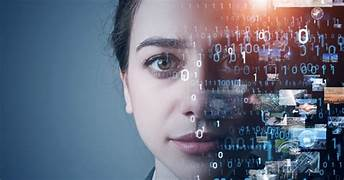
AI has raised concerns and anxieties regarding loss of jobs, digital scams, data privacy, geopolitics, and even the potential to undermine democracy. Use and adoption of AI is infiltrating our everyday lives at an alarming rate. Like any new technology, its use is embedded in culture and has the potential to reinforce existing social hierarchies. AI-generated content is flooding social media. Animators, influencers and others who do creative labour in the social media attention economy see a potential challenge unfolding. This content severely lacks accountability, as the people running these accounts often remain undisclosed. Anonymity carries the dual potential of fostering rightful dissent and regurgitating harmful stereotypes and polarising views. For women in particular, AI has made the digital landscape far more precarious. AI has facilitated the creation of content that perpetuates gender based digital violence, like the use of deepfakes. On the other hand, women face gender policing when their photos are edited without their consent to make them dress ‘modestly’ and fit into conservative notions of a ‘good’ woman. Even AI-generated fruit stories of love and betrayal sometimes perpetuate such notions wherein the wife is the modestly clad sentient fruit and the so-called homewrecker wears revealing clothes. This feeds into what Sudhir Kakar called the Sita-Menaka complex. In The Inner World (1978), Sudhir Kakar explains how the Indian male psyche compartmentalises women into two binary, polar archetypes. A woman can either be the sanskari, submissive, chaste and nurturing Sita, or she can be the sexually devious, assertive, non-conformist Menaka. Lately, AI-generated female influencers have popped up in the creator ecosystem. While they cannot yet form meaningful connections with the audience, generating ad revenue and even securing brand deals is a real possibility.
AI influencers – Gendered expropriation of labour and reinforcement of exclusionary/hegemonic beauty ideals
Connell and Messerschmidt (2005) argue that hegemonic masculinity is a set of social practices that set a standard for the ideal man and allow men to assert dominance over women and men who are deemed less masculine. Men have historically been early beneficiaries of new technology. It allows men early access to financial and social capital that can be generated by the use of the latest technologies. This asymmetry in power and access undergirds the notion that men are better with machines and technology. Hence, technological know-how in many contexts is associated with masculinity. Even now, women drivers are made the butt of jokes, claiming them to be inept for the task. Although it must be noted that if any technology-related work is labelled as tedious and is low-paying, it is likely to be passed on to women. An example of this is how women dominated early film editing when the job was low-paid and associated with unskilled work as opposed to the creative labour of artists and directors. Hence, hegemonic masculinity is not reducible to specific traits but changes with context.
A deeper dive beyond the digital divide in India also reveals that women are at a disadvantage in relation to men when it comes to the ownership of smartphones. Women are more likely to rely on shared devices (Thomas, 2025). This statistic alone is likely to have implications for access to opportunities in the creator economy. Empirical research has shown that the social media creator economy mirrors the traditional labour market, with men being the early beneficiaries, a gender pay gap, and there being a gendered division of labour. Women often produce content related to beauty, fashion, cooking, etc., and men are concentrated in areas about sports, technology and politics (Gioia & Morabito, 2025). The generation of AI slop and AI influencers is following the same trajectory. The influencer culture is highly feminised and driven by the creative labour of women. As AI-generated influencers arrive in the digital marketplace, we must ask ourselves: Whose labour is being exploited and who benefits? These AI influencers are built using the creative work of women influencers as input. These women are neither credited nor compensated. Often, these AI-generated influencer pages are created and run by male-led tech companies. This expropriation of labour is thus highly gendered. Since AI is becoming more mainstream and accessible, these AI influencers could be a potential threat to the same content creators whose work they build upon. For every brand deal secured by an AI-generated female influencer, a woman influencer loses one. While it does take a certain amount of time and skill to establish an AI influencer character, once established, generating AI content regularly is way quicker, easier, and cheaper than what it takes for an influencer to create organic content.
A precedent to this conundrum is Shudu Gram. She is considered the world’s first virtual model. Notably, she was generated using CGI technology and not artificial intelligence. Today, artificial intelligence can create virtual models with the same precision. Shudu Gram is a conventionally attractive black woman created by Cameron James Wilson. What complicates the situation is that Wilson, a British fashion photographer, is a white man. As of now, Shudu Gram has 239 K followers on Instagram and is an ambassador for Open Art AI. This ‘#aibaddie’ recently featured on the cover of Vogue Czechoslovakia. Vogue Covers have long been a coveted achievement in the fashion industry. What this means for the representation of Black women in the industry is a pressing question. The benefits go to a white male from the Global North, and black women artists and models face the risk of displacement.
In India, recently, the case of Tanvi Joshi caught media attention. The AI-generated Tanvi Joshi went viral for a reel wherein she was reciting a couplet of poet Shabeena Adeeb, and the audio belonged to Marziya Shanu Pathan, corporator of Thane Municipal Corporation. Neither of the women was given credit. Other subtle details about this AI persona call for deeper scrutiny. She carries an upper-caste surname and is very fair. Historically, conventions of beauty for women have been unrealistic and rooted in racial, colonial, caste and class-driven body politics. Tanvi Joshi ticks several of these boxes in the context of India, where colourism runs deep and is intertwined with casteism (Ayyar & Khandare, 2013). The attention economy, even before the use of AI, disproportionately benefited creators deemed conventionally attractive. This affirmation of body positivity and body neutrality has a growing influence in these spaces. What does the influx of these AI influencers mean for these spaces in the highly competitive creator economy? When we use the prompt of ‘beauty’ or ‘attractive’ to ask AI to create influencers, the result will likely replicate the dominant ideas of beauty. The creators, often being male individuals, also pose the questions of the male gaze. How does the gaze of the male creator influence how the avatar or persona looks? These AI-generated influencers could potentially have undesirable implications for diversity and inclusion in the digital landscape.
As use of AI is debated from multiple perspectives like employment, appropriation of creative labour, large-scale plagiarism and others, the question of how women specifically are impacted must be added to the list and made a crucial part of the public discourse surrounding artificial intelligence.
References:
Ayyar, V., & Khandare, L. (2013). Mapping color and caste discrimination in Indian society. In R. E. Hall (Ed.), The melanin millennium (pp. 71–95). Springer Netherlands.
Connell, R. W., & Messerschmidt, J. W. (2005). Hegemonic masculinity: Rethinking the concept. Gender & Society, 19(6), 829–859.
Gioia, F., & Morabito, L. (2025). Behind the screen: Gender differences in the creator economy. SSRN Electronic Journal.
Kakar, S. (2012). The inner world: A psychoanalytical study of childhood and society in India. Oxford University Press.
Thomas, S. (2025). Digital dreams, gendered realities: Women in digital India. Centre for Economic Data and Analysis (CEDA), Ashoka University.
***
Shimaila Mushtaq is a political science graduate from Jamia Millia Islamia, New Delhi and is currently working as the Social Media Consultant for The Book Review Journal.
this is actually interesting, i just opened this randomly. it gave me some useful insights which made a difference for me. i might come back and read more later.