
Puneet once asked me a question that made me pause. “How can I talk with strangers without getting shy?” He was fifteen then, studying at a government school in Bastar, a predominantly Adivasi region in central India. Like many Adivasi students I came to know, he was living between state-run residential hostels, classrooms, and the everyday routines of school life in a nearby town.
But when he spoke of these things, his voice grew softer, almost tentative.
Then he told me something else.
“I feel like dancing,” he said. “But I haven’t.”
He told me he had never danced – not in the village, not in the hostel, not even when he was alone.
The sentence could sound small. A young person who thought of himself as shy had not danced. But during my doctoral fieldwork in Bastar in 2022-23, as I spent time with Adivasi young people, aged 14 to 19, who had moved from their home villages to nearby towns for schooling, I came to hear such moments differently. They were rarely only about personality. They were about the quiet work of becoming confident in spaces where ease, recognition, or authority were unevenly available.
This essay follows that quieter labour: the work of becoming confident where confidence is expected before it is supported.
For many of the students I knew, education did not only mean entering classrooms, preparing for exams, or imagining future jobs. It also meant learning how to speak to unfamiliar people, how to sit among students already familiar with the town, how to carry oneself in corridors, classrooms, markets, roads, and hostels, and how much of oneself could be shown. Schooling opened new worlds, but it also made students newly visible within them.
That visibility appeared in small adjustments. A student lowered their voice before answering a question. Someone laughed and looked away when asked about the future. A group of boys stood at the edge of a playground before joining a game. Girls sat close together in the classroom, speaking softly until the teacher arrived. In hostel courtyards, students moved easily among friends from nearby villages, but became quieter when senior students or hostel staff entered.
The body seemed to learn before words did: where to sit, how loudly to speak, when to step forward, when to hold back.
Learning to Take Space
For Adivasi students moving from villages into nearby towns, this learning took place in the movement between social worlds. In the village, recognition came before speech. People knew whose child you were, where your house stood, which hamlet you belonged to, who your relatives were, and what paths you took.
In town, this changed. Students had to make themselves known to people who did not already know their story: teachers, hostel staff, shopkeepers, students from the town, strangers. They had to answer questions, introduce themselves, speak in particular ways, and carry themselves as students who could progress. Being Adivasi mattered here as the position from which students entered these spaces: from village worlds of familiarity into institutions where they could be read as quiet students, hostel students, students from the village, or young people expected to become confident in specific ways.
Education placed them in comparison.
Young people did not always speak about this in the language of identity. They spoke about benches, friendships, shyness, fear, clothes, speech, and the difficulty of knowing how to behave. These were the everyday forms through which difference became felt.
One student described her interactions with students who had grown up in townas polite but limited. “I talk with them, try to be nice with them, in fact, even like some of them,” she shared, “but there is no friendship. I don’t know why.” The line carried no accusation. She described something more ordinary and more difficult: contact without closeness. They spoke. They were civil. They sometimes liked one another. But friendship did not follow.
This was one of the quieter forms of distance I noticed in schools. Students from villages and students from town shared classrooms, copied from the same blackboard, waited for the same bell, and prepared for the same examinations. Yet their relations often remained bounded: greetings, jokes, borrowed pens, occasional conversations. Beyond that, something stopped.
The boundary was not always visible from the outside. A visitor might see only a classroom full of students. But over time, the separations became clearer. Who sat with whom. Who entered the room confidently. Who spoke first. Who stayed near the doorway. Who occupied the front benches. Who moved back when asked to.
Ruchika had noticed this carefully in the girls’ school. Some students from town, she said, made village students hesitant by telling them what not to do. “If we sit on the first bench,” she said, “they will say that they have to sit there, and then we go back.” The movement is small: from the first bench to the back. But it teaches a great deal about where students may sit, how much space they can claim, and how social worlds arrange themselves inside classrooms. The first bench can become a small measure of confidence, ease, and belonging.
Ruchika’s sentence carried force because it did not describe exclusion in grand terms. No one barred the door. No rule said students from villages could not sit at the front. But someone told them to move, and they moved back. That movement contained a lesson about hierarchy, even if no one named it as such.
The Work of Confidence
For Adivasi students from villages, such moments mattered because schooling asked them to enter spaces already organised by social expectations. They were encouraged to study, become confident, speak in recognised ways, and prepare for the future. At the same time, they learned that confidence had limits. To speak too much, sit too far ahead, move too freely, or appear too visible could invite correction.
This is why Puneet’s question about strangers felt significant. “How can I talk with strangers without getting shy?” He was not only asking for advice about conversation. He was asking how to enter a world in which speaking to unfamiliar people had become necessary. The world of school, work, travel, offices, interviews, and computers required a different public self. It required a voice that could cross distance.
This movement could build confidence. It could also produce a new alertness.
I saw this alertness in the way students carried themselves across school and hostel spaces. In the hostel, the day had a rhythm: waking, washing, eating, school, study, play, dinner, sleep. Students joked, quarrelled, shared food, copied homework, and teased one another. They made these institutions livable.
But when they crossed into more formal spaces – the classroom, the road outside the hostel, the market, the bus stand – many became more careful. Their speech changed. Their laughter lowered. Their bodies gathered themselves.
This carefulness should not be mistaken for lack of desire. The young people I knew wanted many things: jobs, phones, travel, friendship, respect, income, recognition, and the ability to help their families. They wanted to leave and return, to be known beyond the village without being cut off from it. They wanted to become more confident, but not always at the cost of becoming someone else.
A Dance That Remains Imagined
Puneet’s wish to dance belonged to this field of desire.
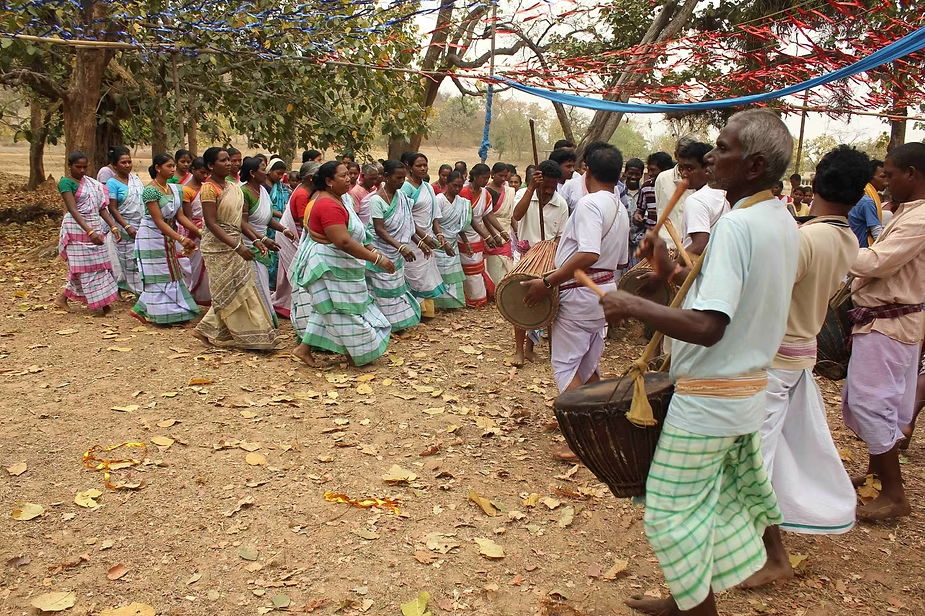
Dancing can feel public, even when done alone. It allows the body to take space. It asks for a kind of permission that may not come from others. For Puneet, that permission had not yet arrived. He felt like dancing, but he had not danced.
Perhaps he was shy. Perhaps he had never had the occasion. Perhaps no one around him danced in a way that made him feel he could. Perhaps the hostel, school, and village each carried their own limits. What matters is that he noticed the desire and the hesitation together. That combination ran through many conversations.
Students wanted to move forward, but they also learned to measure themselves. They wanted to speak, but also knew when speech might expose them. They wanted friendship, but often had to work within the limits of acquaintanceship. They wanted to sit at the front, but also understood what moving back could avoid.
Access to schooling is often discussed in terms of enrolment, attendance, infrastructure, and future opportunity. These matter. But for students moving from Adivasi villages into town schools and hostels, education also involves a more intimate learning: how to live in the spaces that schooling opens. Schooling asks them to speak to strangers, sit for exams, imagine work, and carry themselves as students who can progress. But it does not always offer the social ease required to inhabit these demands. Young people have to build that ease unevenly, through everyday practice – by trying, withdrawing, watching others, joking with friends, and learning when to step forward.
They learn it in fragments. In a question about shyness. In a friendship that does not become friendship. In a first bench quietly surrendered. In a dance that remains imagined.
These moments may seem minor beside broader discussions of schooling, development, and opportunity in Bastar. But they reveal what such discussions miss: education is also a matter of learning how much space one can take in the worlds that schooling makes available. For Adivasi students, it happens through the body before it becomes an argument. It happens when someone decides whether to speak, where to sit, how much to laugh, whom to trust, and how far to step into view.
Puneet wanted to learn how to talk to strangers. He wanted to work with computers. He wanted to travel. He wanted, perhaps, to become someone who could move more easily through the world.
And still, he paused.
“I feel like dancing,” he said.
For now, he hadn’t.
***
Sahib Singh Tulsi recently completed his PhD in Educational Studies at the University of British Columbia, Vancouver. His research focuses on Adivasi youth, education, mobility, and institutional life in central India through long-term ethnographic fieldwork.