
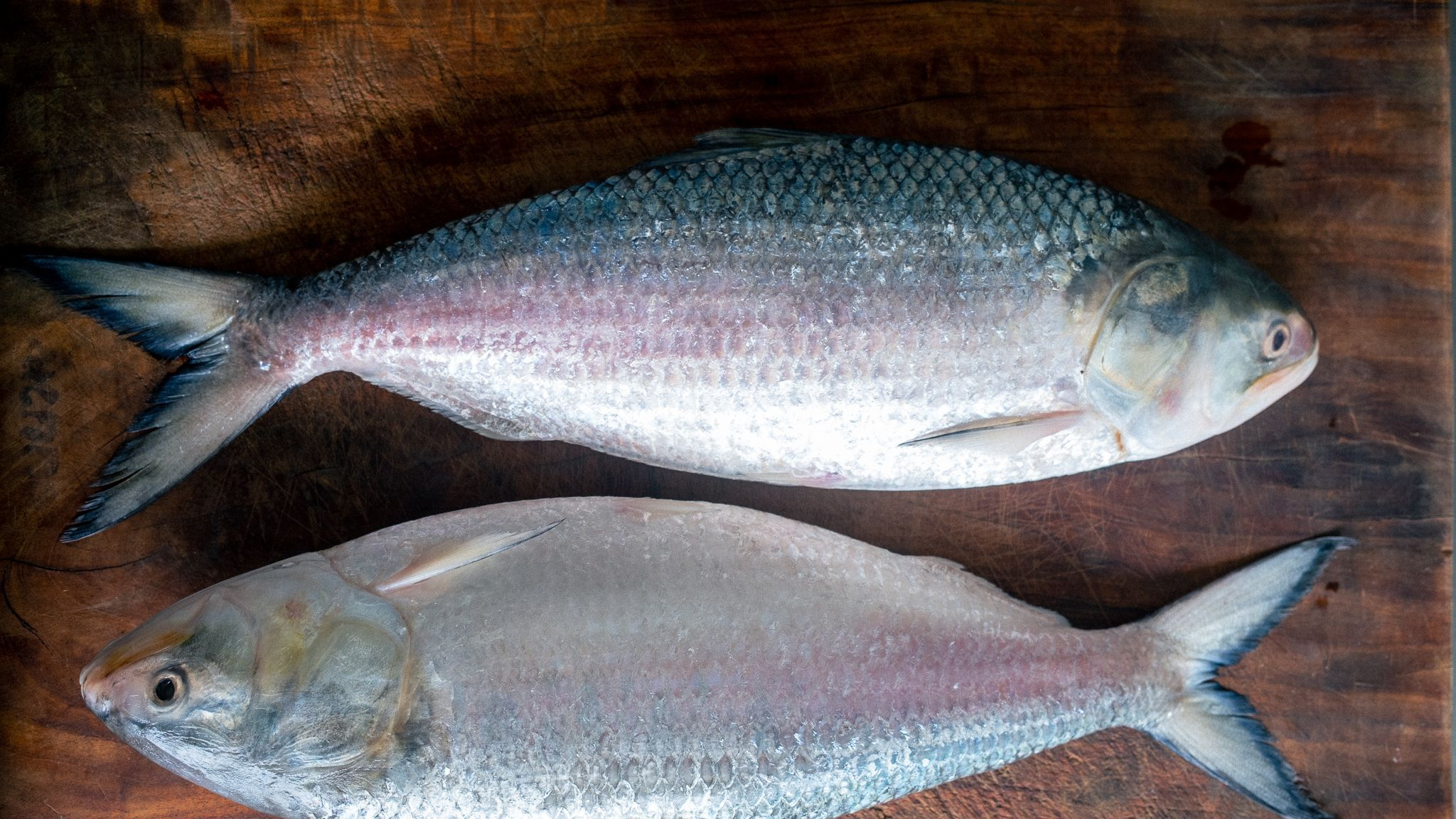
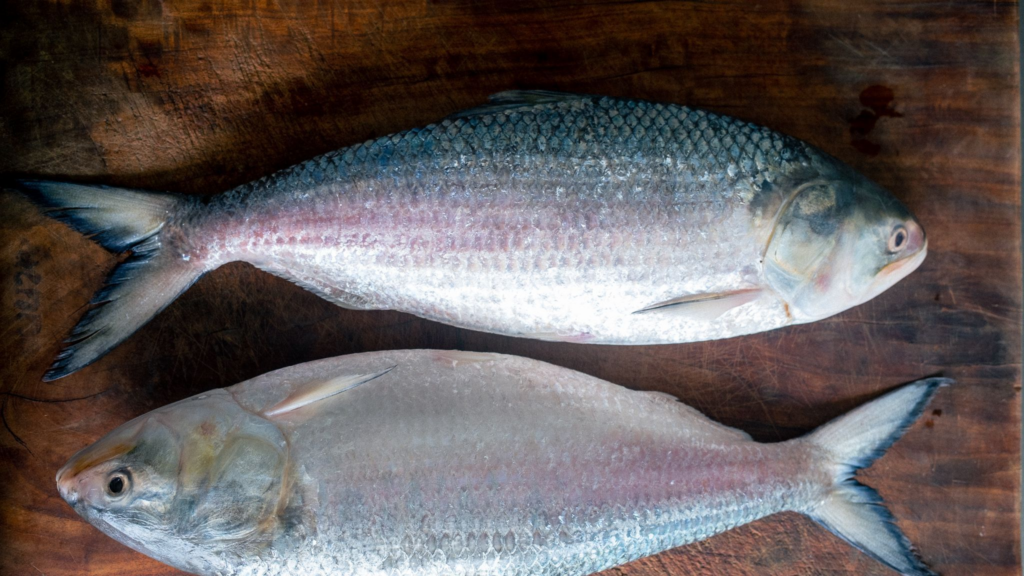
Bengal can be understood through its rivers or through a single fish that has come to carry all of them. No fish is eaten the way hilsa is eaten. It is cooked, yes, but it is also remembered, longed for, and argued over. To call hilsa “just a fish” misses everything that matters about it. It sits at the centre of festivals, weddings, monsoon afternoons, and even the grief of Partition. At the same time, it is the backbone of an entire economy, and the people who catch it are often the poorest link in that chain. Hilsa, in other words, is a story about culture and survival told at once.
The cultural weight of Hilsa is hard to overstate. Long before it reaches the dining table, it has already found its place in Bengal’s rituals, family traditions, and collective imagination. During festive seasons, a Hilsa on the table is more than a meal. It is a quiet expression of abundance and good fortune. In many Bengali weddings, the groom’s family presents a pair of Hilsa, known as jora ilish, to the bride’s family, a custom that continues among many families with roots in East Bengal. Beyond ritual, the fish carries a prestige of its own. Padma Hilsa, in particular, is celebrated not merely for its flavour but for the stories attached to the river from which it comes. Many Bengalis believe that the fish carries something of the Padma’s character in its flesh, a sentiment later reinforced when Padma Hilsa received Geographical Indication (GI) status, linking the fish officially to its place of origin. Serving Padma Hilsa, therefore, is not simply about offering an expensive delicacy; it is also a subtle way of expressing heritage, taste, and social standing. (Mahmud, 2020; Matthias, n.d.)
The cultural meaning of Hilsa became even deeper after the 1947 Partition. For thousands of families who left East Bengal, the fish came to embody memories of rivers they could no longer return to. Longing for the Padma or the Meghna was often expressed through longing for Hilsa itself, turning an everyday meal into a reminder of home. This emotional attachment continues to echo in the familiar Bangal–Ghoti debates over whose Hilsa tastes better. Beneath the playful rivalry lies a shared history of migration, belonging, and loss rather than simply a disagreement over flavour. Bengali literature has long captured this emotional world. From the river landscapes of Tagore and Manik Bandyopadhyay to the poetry of Satyendranath Dutta and Buddhadeb Basu, Hilsa appears not merely as food but as a symbol of memory, migration, and the enduring bond between people and place. In this way, a single fish came to carry the emotional history of a divided Bengal. (Matthias, n.d.)
The dependence on Hilsa comes at a high social cost. In fishing villages such as Shatnol Malopara in Chandpur, poverty remains widespread, with many fishers working on boats owned by mohajons (moneylenders) rather than their own. A similar pattern exists in Lakshmipur, where many fishers rely on loans to continue fishing and have little control over how or where they sell their catch. Together, these studies reveal a livelihood shaped by chronic indebtedness and unequal market relations rather than economic security. (Hossain et al., 2022; Rana et al., 2018)
This is where the idea of marginalisation becomes useful. The fishers who catch Hilsa are rarely the ones who profit from its rising prices. A market chain study from Chandpur found that fishers receive only about 55 per cent of the final price paid by consumers, with the rest absorbed by intermediaries at each stage between the river and the dinner table (Islam et al., 2022). Debt arrangements with mohajons and aratdars (commission agents who control market access) tie fishers to specific buyers, leaving them little room to negotiate even when prices are high (Diba et al., 2022). This irony lies at the heart of marginalisation: those who depend on hilsa for their livelihood are often the least able to enjoy its economic benefits or even consume it themselves as profits accumulate elsewhere along the value chain. (Islam et al., 2022; Diba et al., 2022).
Hilsa embodies two realities that are rarely considered together. On one hand, it is a powerful symbol of Bengali identity, history, and cultural pride. On the other hand, the economy built around it leaves the very fishers whose labour sustains this tradition with the smallest share of its value and the greatest vulnerability when conservation policies interrupt their livelihoods. Conservation and culture alike depend on these communities, yet their well-being is rarely placed at the centre of either policy or public discussion.
To understand hilsa sociologically is to see that its cultural and economic lives cannot be separated. The same fish that evokes memories of home and belonging also moves through a value chain marked by unequal bargaining power, indebtedness, and unequal profit distribution, where those who harvest it often benefit the least. Protecting Hilsa, therefore, cannot mean protecting the species alone. It also requires protecting the people whose knowledge, labour, and livelihoods have sustained it for generations. Otherwise, conservation risks preserving a cultural icon while neglecting the communities that keep it alive.
References:
Diba, S. A., Irfanullah, H. M., Selim, S. A., & Raihan, S. T. (2022). A situational analysis of small-scale fisheries in Bangladesh: From vulnerability to viability (V2V Working Paper No. 2022-1). V2V Global Partnership, University of Waterloo.
Hossain, A. B. M. A., Mahdi, G. M. A., Azad, A. K., Kabir, S. M. H., Pramanik, M. M. H., Ullah, M. R., Hasan, M. M., & Ullah, M. A. (2022). Socioeconomic, livelihood and cultural profile of the Meghna River hilsa fishing community in Chandpur, Bangladesh. Archives of Agriculture and Environmental Science, 7(4), 549–558.
Islam, M. J., Hasan, M. A., Sayem, A., & Kunda, M. (2022). Marketing system of the hilsa fish (Tenualosa ilisha) in the Meghna River estuary of Chandpur, Bangladesh. Journal of Sylhet Agricultural University, 9(2), 205–212.
Mahmud, Y. (Ed.). (2020). Hilsa fisheries research and development in Bangladesh. Bangladesh Fisheries Research Institute.
Matthias, M. (n.d.). Ilish. In Encyclopaedia Britannica. Retrieved March 21, 2026, from https://www.britannica.com/animal/ilish
Rana, M. E. U., Salam, A., Nazrul, S. N. K. M., & Hasan, M. M. (2018). Hilsa fishers of Ramgati, Lakshmipur, Bangladesh: An overview of socio-economic and livelihood context. Journal of Aquaculture Research & Development, 9(7).
***
Uthsa Sarker is a postgraduate student of Sociology at the University of Mumbai, with academic interests in culture, religion, sociology of the environment and the sociology of food systems.