
In June 2026, a Ministry of External Affairs official during a press conference made a statement while answering questions from the media persons. It offered, what looked on text, like a narrow legal clarification; the Indian passport, he said, is merely a travel document, not a document of citizenship, and reiterated the fact with clarifications and stated that the passport is a document meant to ‘regulate the departure from India of citizens of India’. It attests to nationality abroad; it does not settle the question of belonging at home. The statement arrived amid the anxieties of the Election Commission’s Special Intensive Revision (SIR) of electoral rolls and citizenship debates, and it provoked a disproportionate amount of disquiet for something so doctrinally unremarkable. This was, after all, consistent with the letter of the Citizenship Act, 1955. But it withdrew certainty from an instrument that millions of Indians had quietly assumed was the most authoritative marker of belonging they would ever hold. If a passport, issued only after police verification and sworn declarations of constitutional allegiance, and with the emblem of the Republic of India, is not proof of citizenship — then what is?
The Ministry officials answered that no single document is. And this, I want to suggest, is not an incidental bureaucratic quirk but the visible tip of a much longer, much colder architecture — one that two recent books, read together, help us see with unusual clarity. Bryan S. Turner’s The Rise and Fall of Citizenship (Routledge, 2024) offers the global theoretical vocabulary for a citizenship that has eroded into something thinner and more conditional. R. B. Bhagat’s Population and the Political Imagination; Census, Register and Citizenship in India (Routledge, 2022) underscores the specifically Indian historical machinery — the census, the NPR, the NRC (one can add SIR in this list too) — through which that thinning has been engineered. Between them sits a present-tense case study: an Indian citizen who must continuously re-prove and re-enumerate themselves against a shifting, disaggregated archive of paper, biometrics, and bureaucratic discretion. I want to call this figure the cyborgian citizen (I borrowed the concept from this article) — a subject who exists, administratively, only as the live intersection of body and machine-readable database, and whose relationship to the state increasingly resembles a subscription rather than a contract.
What Turner Gives Us — and What He Doesn’t
Turner’s book is, at its core, an elegy. Across nine chapters that revisit and revise a career’s worth of seminal scholarship, he traces how the post-war model of social citizenship — anchored in welfare rights, stable employment, and civic participation — has eroded under neoliberal economics, global mobility, and technological change. The moral and institutional architecture that sustained citizenship’s ‘golden age’ between 1945 and 1980, he argues, has given way to denizenship; quasi-citizen statuses in which individuals formally possess rights but lack substantive access to welfare, labour security, or political agency. Reading Marshall, Dahrendorf, Shklar, Crick, and Habermas against this decline, Turner is at his sharpest when he shows that Marshall’s tripartite model of civil, political, and social rights was never as universally inclusive as its evolutionary optimism implied — citizenship, Turner insists, was always stratified by class, gender, and ethnicity, even in its supposed golden age.
This is useful, but it is also a frame built almost entirely to reflect Western reality (Britain and the United States) — Turner’s own examples rarely leave the Atlantic world, and his invocation of Greco-Roman and Christian traditions of hospitality as a normative fix, however rich, sits uneasily against the realities of postcolonial migration politics. Most tellingly for our purposes, Turner’s book has almost nothing to say about digital citizenship, algorithmic governance, or biometric infrastructure — the very terrain on which Indian citizenship is currently being contested. His ‘denizen’ describes a citizen stripped of substance while retaining form. What he does not anticipate is a state that makes even the form — the documentary evidence of belonging itself — perpetually unstable. For that, we need to look east, and to a different kind of archive.
Bhagat’s Machinery: Enumeration as Suspicion
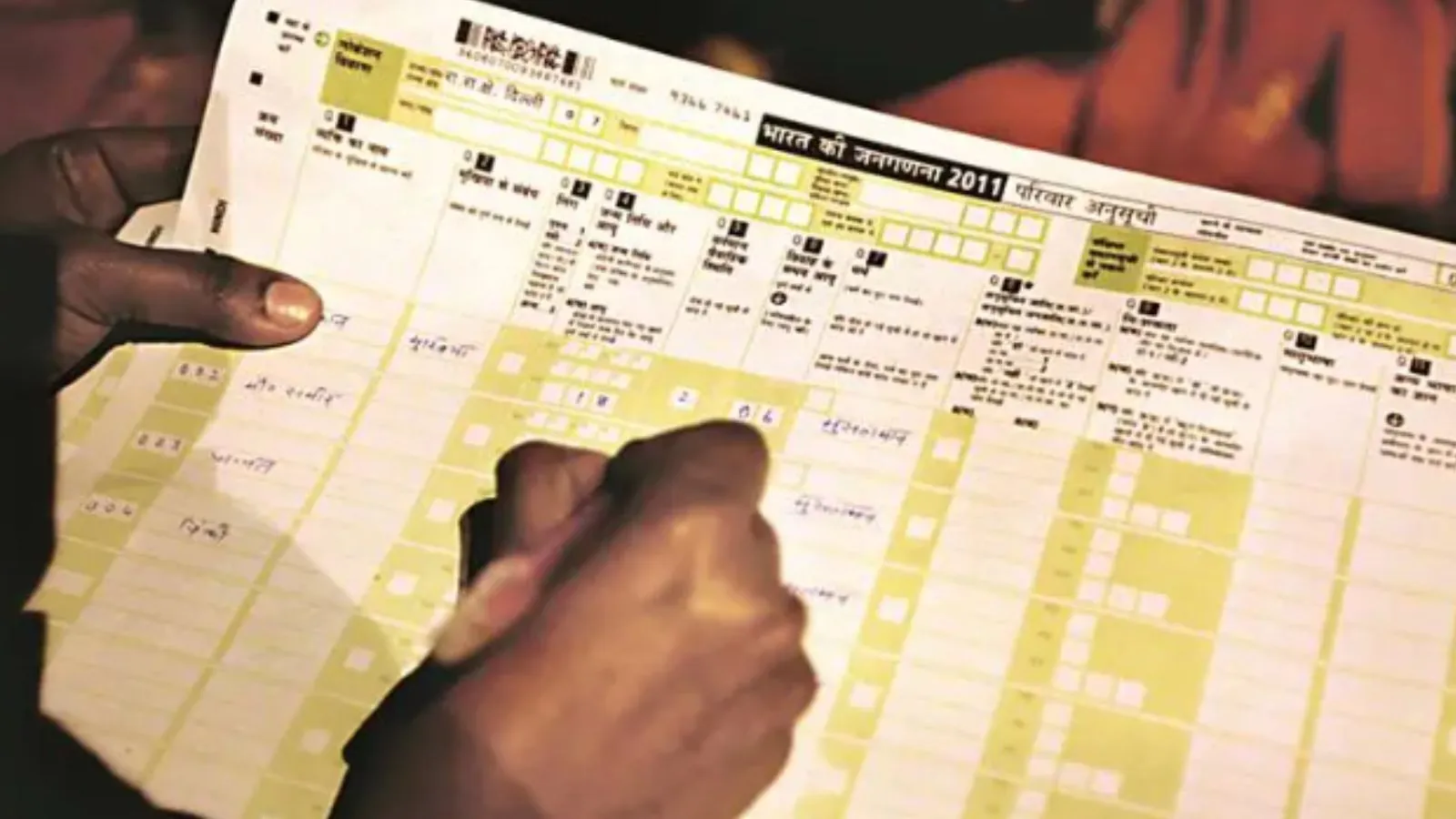
If Turner tells us citizenship has been hollowed out, Bhagat tells us how the hollowing is engineered, technically and historically, in the Indian case. His central image — that the census emerged ‘a panoptical device to people what was a microscope to bacteria’ — reframes enumeration not as neutral counting but as an act of identity-construction, a site where the state’s vision of the nation is both reflected and contested. Population, in Bhagat’s account, is not a passive sum of people but a politically imagined artefact, sculpted by colonial classificatory habits and postcolonial anxieties about who belongs.
Bhagat traces this through the specific machinery: the National Population Register’s 2010 biometric turn, which eroded the census’s older voluntary facade; the National Register of Citizens as a ‘backdoor’ citizenship sieve; the Assam NRC’s 2019 draft, which excluded 1.9 million people, disproportionately of Bengali origin, through evidentiary mazes and algorithmic glitches. What his book demonstrates, with real empirical patience, is that these instruments were never simply administrative housekeeping. They produce, by design, a population of the document-poor — people whose claims to belonging are entirely real but whose personal archives don’t match the state’s preferred format. A Chakma Buddhist’s statelessness in Arunachal Pradesh, a Bengali Muslim’s futile search for a 1971 birth certificate in Assam or in Bengal; these are not edge cases in Bhagat’s telling, but the predictable output of a system built to classify first and recognise second. This is the crucial supplement to Turner. Where Turner’s Western citizens lose substantive rights while their formal status remains secure, Bhagat shows an Indian state where the formal status itself has always been contingent on documentary proof — proof that the poorest and most marginalised are structurally least equipped to produce.
From Jus Soli to Conditional Inclusion
Read against Bhagat’s classificatory lens, India’s legal history reveals a coherent trajectory rather than a series of isolated amendments. The Citizenship Act of 1955, drafted in the shadow of Partition, was initially expansive; anyone born in India after 26 January 1950 was a citizen, largely irrespective of parentage — a jus soli settlement suited to a state absorbing the demographic chaos of decolonisation. That settlement did not survive the Assam movement. The 1985 Assam Accord and the Citizenship (Amendment) Act of 1986 marked the first shift toward jus sanguinis; birth in India was no longer sufficient; at least one parent had to already be a citizen. The 2003 amendment tightened this further, requiring both parents to be citizens or explicitly not classifiable as ‘illegal migrants’ – a category it newly defined, and one that carried the legal architecture for the NRC and NPR that Bhagat’s book dissects. The Citizenship (Amendment) Act of 2019 added religion as a criterion for exemption from that ‘illegal migrant’ classification.
Each amendment was framed, in its moment, as a bounded response to a specific problem — porous borders, undocumented migration, refugee flows. Read cumulatively, as both Bhagat and the present moment invite us to, they describe a single, continuous movement; from citizenship as a status conferred by territorial presence to citizenship as a status proven through documentary descent; a proof that grows harder to discharge the further one is from the state’s preferred archive.
The Subscription and the Cyborg
It is into this documentary vacuum that Aadhaar inserted itself, and it is here that the argument sharpens into its most contemporary form. Aadhaar was explicitly designed — and the Supreme Court affirmed, in Puttaswamy and subsequent litigation — as a tool of identity verification and welfare delivery, not citizenship determination; it is open to residents, not only citizens. Yet its near-mandatory presence at every point of contact with state and market alike — ration shops, bank accounts, SIM registration, hotel check-ins, pension disbursals — has made it function, in the popular and administrative imagination, as something far closer to citizenship’s proxy than its designers intended or its legal status permits.
What Aadhaar represents is not simply a biometric database but a new grammar of belonging, borrowed less from constitutional citizenship than from the logic of the platform economy. In classical political theory, citizenship is an enduring status; one possesses rights by virtue of membership in a political community, not by continuously proving it. Aadhaar inverts this logic structurally. The Aadhaar-holder is authenticated, not recognised — verified against a live, updatable record rather than acknowledged as a rights-bearing member whose standing is presumptively secure. To access food grains through the Public Distribution System, to draw a pension, to open a bank account, the citizen must authenticate in real time, at every transaction, indefinitely. Citizenship, under this regime, is no longer a static status; it operates as a live subscription, continuously renewed at every point of service delivery, and vulnerable to lapse at any one of them.
The consequences of lapse are not abstract. The 2018 mass deactivation of Aadhaar numbers during data ‘cleaning’ drives, or locking of Biometrics of almost 2.7 million residents in Assam during the National Register of Citizens — leaving genuine residents unable to access rations or pensions until they authenticated themselves anew — illustrates the logic with precision. When the system fails to authenticate, whether through worn fingerprints among manual labourers, network outages in rural areas, or database syncing errors, the state treats the citizen not as a rights-holder with a systemic grievance but as a failed user, a subscriber whose credentials have not passed verification. The burden of reactivation falls entirely on the individual. This is not a side effect of poor implementation; it is the constitutive asymmetry of the subscription model. In a commercial subscription, the subscriber can cancel or escalate; here, the asymmetry is total. The state retains unilateral power to suspend, deactivate, or alter the parameters of the digital identity. The citizen holds no reciprocal power over the architecture of their own legibility.
This asymmetry is compounded when Aadhaar moves from state delivery platforms into the private sphere. When a telecom provider, a bank, or a hotel uses a state-backed identity system to verify a customer, the boundary between public citizenship and private market transaction dissolves. The state effectively guarantees the individual’s identity to capital, converting political belonging into a verified credential that facilitates commercial exchange. In these spaces, the citizen is no longer a claimant of rights before the state; they are a consumer navigating a service interface, their political membership functioning as a trust token for private transactions. The de-politicisation is structural; once social welfare is routed entirely through the language of ‘leakage reduction,’ ‘efficiency,’ and ‘target optimisation,’ the political claim to welfare as a matter of social justice is quietly replaced by a technical interaction between a user and a platform. The right-bearing citizen becomes a client. The constitutional entitlement becomes a service tier.
The figure this produces is what I want to call the cyborgian citizen — a subject who exists, administratively, only as the live intersection of body (fingerprint, iris) and database (the UIDAI record, the electoral roll, the NPR entry), each element individually insufficient and none equivalent to the constitutional status that Articles 5 to 11 are meant to guarantee. Drawing on Donna Haraway’s theorisation of the cyborg as a hybrid of organism and machine, and Shohini Sengupta’s (2023) argument that the Indian enumerative state seeks to produce an ‘ideal cyborg’ – individual and data collapsed into a 12-digit number. I want to emphasise precisely what the ’ ideal cyborg leaves as a remainder: the citizen who cannot complete the authentication loop, who falls through the gaps between systems built by different ministries, for different purposes, on different legal foundations. The cyborgian citizen is not only the person successfully enrolled and verified; it is equally the person rendered administratively illegible – inhabiting a liminal space where one is not stateless in law, but suspended in a condition the law has no clean name for, unable to close the circuit between body and record that the state now requires for belonging to be legible at all.
The Election Commission’s 2025–26 Special Intensive Revision (SIR) — requiring electors across an expanding list of states to establish ‘legacy linkage’ to the previous electoral roll dating back two decades — is the clearest recent instance of this apparatus at work. The Supreme Court, in May 2026, upheld the exercise as within the Commission’s Article 324 mandate while insisting the Commission has no power to adjudicate citizenship, and that deletion from a roll does not, in law, amount to a determination of non-citizenship. This is doctrinally careful and, in lived experience, close to meaningless. A journalist whose passport renewal stalled for months after his name was removed from the West Bengal rolls during SIR verification — never declared a non-citizen by any competent authority, yet caught in a circular suspension between passport, roll, and police verification report — was not stateless. He inhabited something the law cannot quite name; a citizen rendered administratively illegible, his subscription to functional citizenship suspended not by revocation but by the simple non-interoperability of systems that were never designed to guarantee his belonging in the first place. The June 2026 passport clarification, read against this backdrop, did not create this condition. It simply said aloud, in the government’s own voice, what the documentary regime had already made true in practice.
An Uneven Topography of Suspicion
None of this falls evenly. Bhagat’s book is most persuasive precisely where it becomes most local — in its dissection of Assam as the NRC’s ‘laboratory,’ where the 1971 cut-off functions, in his reading, as an ethno-nationalist relic entrenching a permanent ‘illegal’ binary. The burden of proving descent, of producing legacy linkage, of surviving a SIR-style purification exercise falls heaviest in provincial, borderland regions — Assam, Bengal, Tripura (beginning from September 2026) the towns and small cities of India’s eastern frontier — where colonial and postcolonial border-making has always rendered the line between citizen and migrant least stable and most politically charged. Anxiety was acute enough among Bengal’s Matua refugee community, many of whom settled after the 2002 legacy cut-off, that political leaders found it necessary to reassure them that the CAA offered a separate route to status — even as SIR threatened to strip them of an electoral identity many had held for decades. This is not a coincidence, and it is not new. It is not that the documentary regime introduces a fresh vulnerability into these communities; it formalises a suspicion of trespass that long preceded any electoral roll. The cyborgian citizenship apparatus does not act on a level field. It acts on populations already differentially exposed — by histories of caste, religion, language and regional marginalisation — to the presumption that their belonging requires proof in the first place.
Two Metaphors, One Condition
Turner closes his book by reaching for the ‘law of hospitality’ — a normative, almost theological register through which societies might rebuild civic bonds. Bhagat closes this by imploring a retooling of enumeration toward rights-based inclusion, welfare over witch-hunts, a ‘quaint faith,’ as I have called it elsewhere, in reform against authoritarian creep. Both are, in their own registers, hopeful gestures grafted onto otherwise bleak diagnoses.
I am less sure the Indian case supports either kind of hope, because the two books are actually describing different diseases. Turner’s denizen has lost something — a substantive social contract that once existed, however unevenly, and might in principle be recovered. Bhagat’s citizen-in-waiting (liminality) was never securely holding what Turner’s welfare-state citizen took for granted; the Indian documentary state was built on suspicion from its colonial inception, and independence never fully dislodged that inheritance. What SIR, Aadhaar, and the passport row reveal is not erosion of an achieved status but the exposure of a status that was always conditional, now administered through infrastructure efficient enough to make the condition impossible to ignore.
To call this citizenship ‘on subscription’ is not to suggest India has formally adopted a model of conditional, payment-like membership. It is to name the affective and administrative reality a growing number of Indians now inhabit; a condition in which no single document secures their standing, every credential is provisional and revocable, and the relationship between citizen and state increasingly resembles the asymmetric terms-of-service relationship between a subscriber and a platform, rather than the constitutional relationship between a rights-bearing member and a polity. The vocabulary the state itself reaches for gives this away. Know Your Customer (KYC) — a term lifted directly from banking compliance, designed to verify account-holders against fraud and money laundering — is now the mandatory checkpoint through which citizens must pass to interact with their own government. That the state and the market now demand identical proof, in identical language, is not a coincidence of bureaucratic borrowing; it is the clearest evidence that the citizen has been re-classified as a customer, someone whose claim on the system must be verified before it is honoured, rather than someone whose claim is presumptively secure by virtue of belonging. There is no card one can hold up that finally, irrevocably proves one belongs. There is only the next verification, the next renewal, the next KYC — in which the citizen is asked, once again, to prove that their subscription remains active.
***
Suhash Bhattacharjee is a PhD Scholar in the dept of Humanities and Social Sciences at NIT Silchar.