
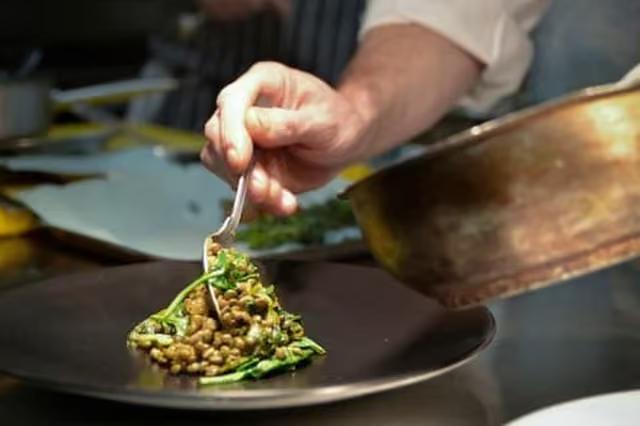
In most South Asian households, the person who knows the most about food has never written any of it down. She knows that the mustard oil must smoke before the fish goes in. She knows, without measuring anything, how much salt a dish needs for the people who will eat it that evening. If you ask her how she knows, she will usually say she just knows. If you ask her whether this is knowledge, she will probably laugh. That laugh is worth taking seriously. It tells us how we have been taught to recognise knowledge: as something written, formal, certified, and produced somewhere other than a kitchen. This essay argues the opposite: recipes are a form of knowledge, carrying memory, judgement, experiment and adaptation, and the reason we do not treat them as knowledge has more to do with who produces them than with what they contain.
Whose knowledge counts
Any serious account of knowledge must begin with a simple but disruptive question: who gets to be a knower? The dominant picture assumes a detached observer who describes the world neutrally. Standpoint theorists argue that no such observer exists. Donna Haraway described all vision as embodied and located; knowledge always comes from somewhere, from a body, a history, a position (Haraway, 1988). Sandra Harding pushed this further: because marginalised people must understand both their own lives and the lives of those who rule them, their partial view can expose power arrangements a comfortable view cannot see (Harding, 1991). Once we accept that knowledge is situated, the question of which sites we have ignored becomes urgent. Domestic work is the most obvious. It is done daily, by most women, in every household, and it is almost absent from what we call the knowledge system.
What a recipe contains
Consider what a cook does that a written recipe cannot capture. She judges readiness by sound and smell rather than by time. She substitutes when an ingredient is missing, following a logic about texture, sourness and heat that she has never stated aloud. She knows that the same recipe behaves differently in a Dhaka kitchen in July and a Mumbai kitchen in January. This is embodied knowledge: knowledge that cannot be separated from the senses and the hands that hold it. It is also what Michael Polanyi called tacit knowledge, the kind we possess but cannot fully put into words, so that we know more than we can tell (Polanyi, 1966). A written recipe is the thin, transferable residue of a much thicker practice. Anyone who has followed a recipe exactly and produced something wrong already understands this. Cooking, then, is not the execution of instructions but continuous decision-making under changing conditions, which is a fair description of most work we call skilled.
Learning without a syllabus
Because this knowledge is not written, it travels through presence. Girls learn by standing beside their mothers and grandmothers, watching, being corrected, being handed small tasks, absorbing timing and proportion long before they are ever told a rule. Nobody schedules these lessons. There is no examination at the end. What is transmitted is never only technique. A recipe arrives in a story: this is how your grandmother made it; this is what we cooked during that flood year. Recipes stretch to fit a household’s budget, and they change when migration puts different ingredients within reach (Dutta Chowdhury et al., 2024). But this inheritance is not innocent. In much of South Asia, a girl’s competence in the kitchen is tied to her prospects of marriage and her family’s respectability. She is learning a valuable body of knowledge, and she is simultaneously learning that her worth depends on feeding others well (Soni, 2025). The same practice that gives her expertise also binds her to a role.
The kitchen after marriage
In many households, the daily menu is organised around the tastes of senior men, so what gets cooked is a matter of hierarchy as much as skill. Marriage marks the sharpest break. A newly married woman enters an unfamiliar kitchen governed by someone else’s standards: different proportions, different ingredients, different ideas of what a dish should taste like. The knowledge she brought from her mother’s kitchen does not disappear, but it becomes the wrong knowledge in the wrong place. Over years of cooking for a husband and his family, her own preferences recede, and women often report, long afterwards, that they have not eaten the food they like in many years (Soni, 2025). This is a quiet form of epistemic loss. Nothing is formally taken away. A whole body of expertise is simply never called upon again, and eventually it thins. When we ask why so much women’s knowledge appears to vanish across a generation, this is a large part of the answer: not that it was destroyed, but that it was never permitted to be used.
Cooking as claim-making
It would be a mistake to leave the kitchen as a place of pure constraint. Within these limits women act, adapting inherited dishes into something recognisably their own. Among migrant families, the kitchen becomes one of the few spaces where a homeland can be reproduced daily, through a smell, a spice combination, a dish that does not belong to the country outside the door. Sonia Pinto describes this as a memory, a way of carrying home across a border and resisting the pressure to disappear into someone else’s culture (Pinto, 2025). Food blogs and family recipe notebooks put on record a knowledge that formal institutions never asked for. When a married woman begins, after years, to cook her own way again, that too is a claim (Dutta Chowdhury et al., 2024). None of this overturns patriarchal arrangements. It does something smaller and real: it insists that the person in the kitchen is a knower.
Widening what we mean by knowledge
The argument is not that recipes deserve admission to the academy as a special case, but that our idea of knowledge has been drawn too narrowly, and the boundary has consistently fallen along lines of gender. Taking recipes seriously as knowledge means accepting that expertise can be oral, that it can live in hands and memory rather than in citations, and that the people who hold it are doing intellectual work even when nobody describes it that way. It also means being honest about the conditions under which it is produced: unpaid, unrecognised, and often compulsory. A sociology that can only see knowledge where it has been written down will keep missing most of what people know. The kitchen is a good place to start, because it is where a great deal of thinking has always happened in plain sight.
References:
Dutta Chowdhury, P., Beena, G., & Das, S. (2024). Food, memories, and women’s identities. IIS University Journal of Arts & Social Sciences, 13(2), 48–64.
Haraway, D. (1988). Situated knowledges: The science question in feminism and the privilege of partial perspective. Feminist Studies, 14(3), 575–599.
Harding, S. (1991). Whose science? Whose knowledge? Cornell University Press.
Pinto, S. (2025). Food and identity in South Asian diaspora narratives: Culinary practices as cultural memory and resistance. International Journal of English Language Research Studies, 2(1).
Polanyi, M. (1966). The tacit dimension. Routledge.
Soni, Y. (2025, March 28). Cooking under pressure: The gendered transmission of culinary knowledge. Round Table India.
***
Uthsa Sarker is a postgraduate student of Sociology at the University of Mumbai, with academic interests in culture, religion, sociology of environment and the sociology of food systems.